


How Long Did His Undergraduate Studies Take?
Total time in undergraduate study
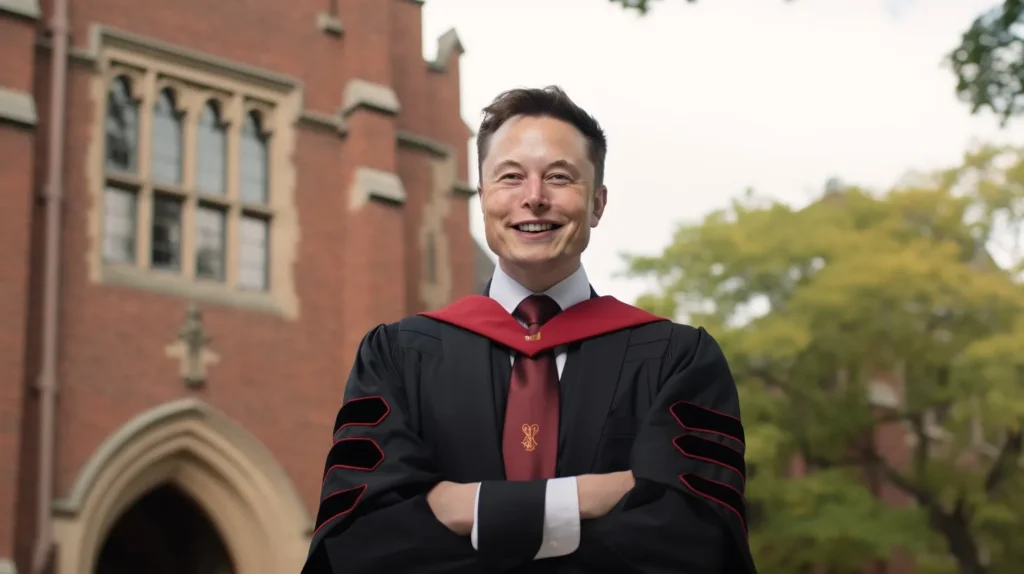
Counting the Pretoria term, his undergraduate years ran from 1989 to 1995, roughly six years. The total is longer than most people expect because credits do not always transfer cleanly between institutions, and because he extended his studies to complete a second degree.
Why 1995 and 1997 both appear in the record
He has said he earned his degrees in 1995, the year he finished coursework. Penn did not formally confer them until 1997, according to biographical accounts compiled at this reference record.
Both years are accurate, but they describe different milestones. Coursework completion and degree conferral are separate events at most universities, a distinction worth knowing for anyone tracking their own graduation requirements.
How transfers affect college timelines
Time in college depends on transfer rules, major changes, and school policies. Students who switch institutions or add a second major often take longer to graduate. This is common and is not a failure.
His studies wrapped up around 1995, after which he left formal education. The path shows steady progress rather than a rushed exit.
Elon Musk Education Degrees: What He Actually Studied
Bachelor of Arts in physics
The first degree was a BA in physics from Penn’s College of Arts and Sciences, with a focus on theory and analysis rather than applied engineering. Note that some older articles list this as a Bachelor of Science; university records list it as a BA.
Degree in Economics
His economics degree provided a different perspective on systems and decision-making. Together, these areas offered broad academic exposure. They later connected to his work, but the degrees themselves were academic. They were not job training programs.
Bachelor of Science in economics
The second was a BS in economics through Wharton. He extended his studies by roughly a year specifically to finish it, a deliberate choice rather than an accident of scheduling.
What these degrees represent academically
Physics programs focus on models, logic, and problem-solving, especially at top-ranked science colleges where theory-based training is emphasized. They do not teach how to run companies.
Economics programs study incentives and large systems. Together, the two provide academic range rather than business skills or engineering credentials.
What Happened With Stanford Graduate School?
What the record actually says
In 1995, he was accepted to a graduate program in materials science and applied physics at Stanford University. He did not complete a graduate degree.
Sources diverge on the next step. Widely repeated accounts say he attended for about two days before leaving. More recent sourced biographical records indicate he was accepted but never formally enrolled. Where the record is contested, we say so rather than picking the tidier version.
Why he stepped away
The decision coincided with the mid-1990s internet boom. He had already completed two Silicon Valley internships in 1994 and co-founded Zip2 the same year he was due at Stanford.
Graduate study works differently from undergraduate education. Stepping away does not erase completed degrees; it reflects a change in plans. That difference is the single most misunderstood part of his academic record.
Early Schooling in South Africa
High school education outside the United States
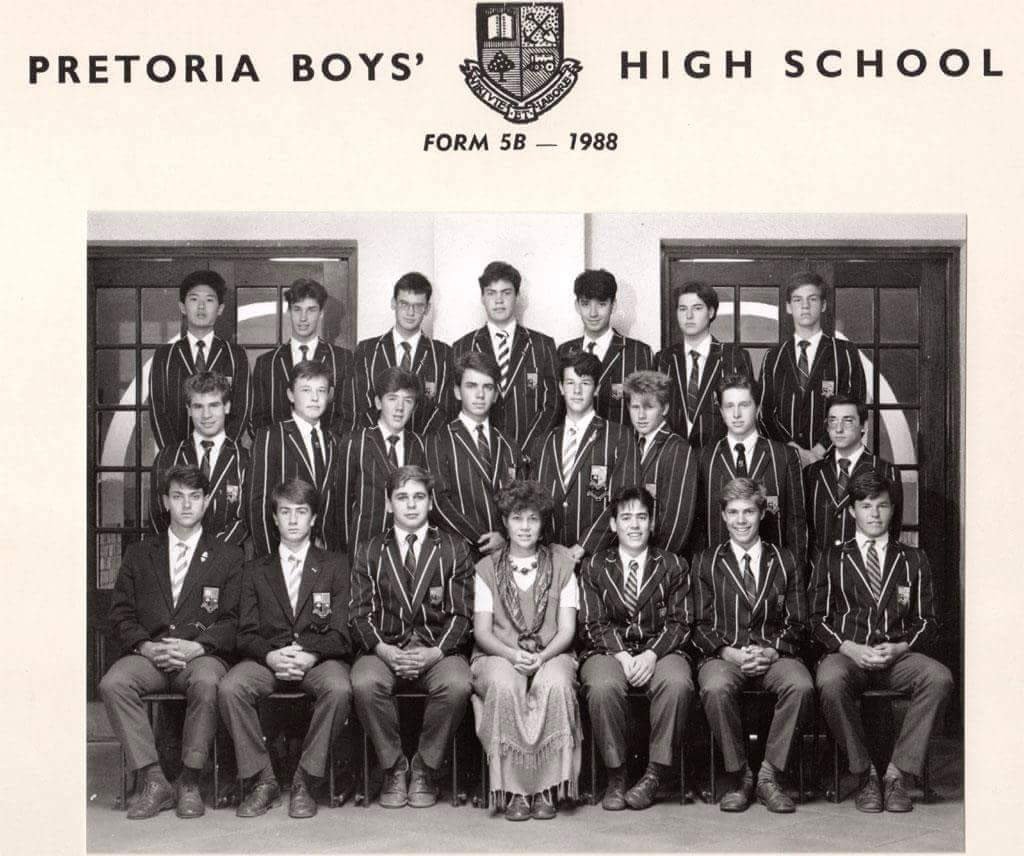
Before university, he attended Waterkloof House Preparatory School, Bryanston High School, and finally Pretoria Boys High School, where he graduated. Accounts describe him as a solid but unexceptional secondary student.
That detail is worth noting for families who assume elite outcomes require flawless transcripts at every stage.
Preparing for university abroad
Finishing high school allowed him to apply to universities abroad and, eventually, to study on three continents. His secondary schooling does not explain his later work; it provides background.
High school prepares students for college systems. Course rigor, language, and exams affect readiness. These factors matter more than school names.
What Did Elon Musk Do at Age 12?
Early interest in computers and coding
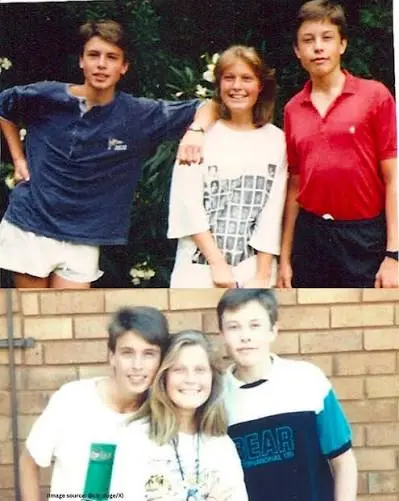
He taught himself programming around age 10 from a computer manual. At 12, he sold a BASIC-based game called Blastar to a trade magazine for roughly $500.
The project was small and informal, a learning step rather than a business plan. Many students explore technical interests early, and this example fits that pattern rather than predicting anything.
The “No Engineering Degree” Question
A frequent follow-up is how someone without an engineering credential ended up leading rocket and automotive companies. The honest answer is that he holds degrees in physics and economics, not an engineering degree, and that his companies employ thousands of credentialed engineers.
Physics training overlaps with engineering in mathematics and first-principles reasoning, which is why the confusion persists. Overlap is not equivalence, and the distinction matters for students choosing between the two majors.
The broader lesson is about role, not credential. Founding and funding a technical company draws on a different skill set than designing its components, and neither path is automatically the stronger choice.
Why Jeff Bezos Is Often Compared
Similarities in public roles
Bezos earned a degree in electrical engineering and computer science from Princeton in 1986, a more conventionally technical path. Both men founded large technology companies, which is why education questions about one often surface alongside the other.
Limits of education comparisons
The comparison has limits. Educational routes differ widely even among founders in the same industry. Using one story to judge another oversimplifies decision-making, since each path reflects personal timing and context.
Topics Often Confused With Education
Separating education from public biography
Many searches blend schooling with unrelated topics. Social media, wealth, and personal life often appear inside questions framed as education questions. Those details reflect public interest rather than academic history.
Education vs career milestones
Phrases like “elon musk education” are sometimes used to mean career history. Education means formal study only. Keeping the two separate improves understanding and prevents false conclusions.
Common Misconceptions
GPA and standardized test scores
Some details were never made public. His college GPA and standardized test scores have not been released, inviting speculation. Responsible analysis avoids filling that gap with invention.
Graduate school exit versus college dropout
The most common error is treating a graduate-program departure as dropping out of college. Two undergraduate degrees had already been completed by that point. Accurate timelines resolve the confusion quickly.
Why missing data should be acknowledged
When information is missing or contested, saying so is more useful than smoothing it over. Stating the limits of what is known supports trust and careful analysis, which is the same standard we apply to admissions data.
What His Education Path Shows
Education as a nonlinear process
His academic history indicates that educational trajectories vary. Three institutions, two countries, one transfer, and a second degree added late do not form a template. The path also does not suggest college is optional.
Separating education from later outcomes
Later ventures including Tesla, SpaceX, and the Boring Company came long after school. Roles tied to the Department of Government Efficiency are unrelated to his schooling.
Figures that circulate online, such as the $307 million Zip2 sale or the $1.5 billion PayPal acquisition, reflect later outcomes rather than school predictors, which is why discussions about return on investment in college degrees require broader context than income alone.
Applying these lessons today
Educational routes depend on timing, access, and goals. Public figures illustrate individual cases, not rules. Separating sequence from outcome supports better planning.
Near the end of this discussion, it is helpful to consider how students plan today. We at CollegeCommit help families understand academic systems, timelines, and trade-offs without exaggeration through the work of a college application consultant. We work 100% online to support informed planning.
Ready to transform uncertainty into opportunity? Join our upcoming cohort at CollegeCommit: Where Preparation Becomes Placement.


