


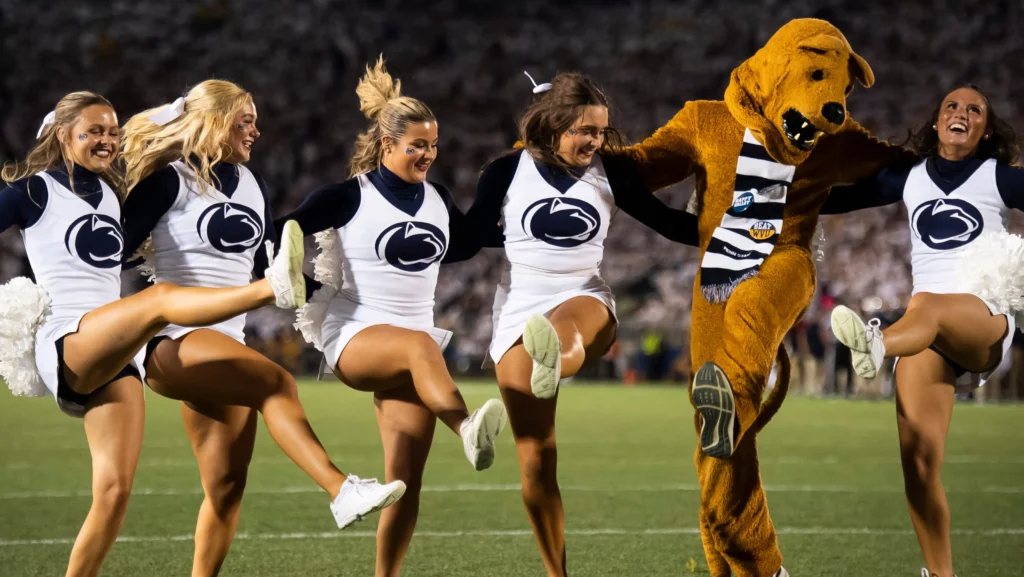
These five come up constantly in conversations about the best cheerleading colleges, but they aren’t the only path to a strong experience. Division II, Division III, NAIA, and junior college programs all offer real competition and real scholarship dollars, covered in detail below.
Key Takeaways
- The best colleges for cheerleading combine strong coaching, regular practice, and a track record of success in national competitions.
- Kentucky, Alabama, UCF, and Louisville are among the most decorated programs, though they compete under two different governing bodies: UCA and NCA.
- College cheer spans several divisions, including Division I, Division II, Division III, NAIA, and NJCAA junior college programs.
- STUNT, a discipline built from cheer’s technical skills, became an NCAA championship sport in January 2026, with its first NCAA championship set for spring 2027.
- Scholarships, recruiting paths, and team rules differ by school, so research helps students compare options before committing.
What Are the Best Colleges for Cheerleading
Schools earn a reputation as the best cheerleading colleges when their squads perform well at nationals year after year. These programs usually have experienced coaches, clear practice plans, and strong support from the athletic department. Some of the biggest factors behind a strong program include coaching quality, safety standards, competition schedule, and scholarship access.
A strong program is not only about winning. Students also consider majors, campus life, and course load when choosing a school.
Top Cheerleading Colleges in the United States
Some schools appear in national competitions year after year, having built strong training systems over decades.
Examples include:
- University of Kentucky
- University of Alabama
- University of Central Florida
- University of Louisville
- Oklahoma State University
These schools are consistently ranked among the colleges with the strongest cheer programs for their competitive results.
Colleges With Good Cheer Teams
Some of the best cheerleading colleges in the country combine skilled coaching, structured training, and consistent support from the athletic department. Here’s a closer look at five programs that come up often in that conversation.
University of Kentucky Cheer Program
Kentucky holds the record for the most UCA Division IA large coed national titles in college cheer history, with 24 championships won between 1985 and 2019. The squad competes under longtime head coach Jomo Thompson and is considered one of the sport’s most consistent programs.
Kentucky also performs at major campus sporting events, including SEC football and basketball games.
University of Alabama Cheer Program
Alabama runs a structured program that supports both football and basketball, training year-round for UCA College Nationals in Orlando. The Crimson Tide has won eight national titles overall, split between the coed division (1984, 2011, 2015, and 2025) and the all-girl division (2015, 2020, 2022, and 2026).
The program benefits from strong training facilities and continuity under head coach Jennifer Thrasher.
University of Central Florida Cheer Program
UCF has won five national titles in program history, including the 2003, 2007, 2020, and 2024 UCA Division IA coed championships, as well as a 2019 game-day title. Its home-field advantage at nationals, held minutes from campus at Walt Disney World, has earned it the nickname “Orlando’s hometown team.”
Training focuses on teamwork, safe stunt execution, and competing for one of the largest athletic departments in the country.
University of Louisville Cheer Program
Louisville’s spirit program is one of the most decorated in college cheer, with 48 combined NCA titles across its large coed, small coed, and all-girl squads. The all-girl squad alone has won 18 NCA championships under head coach Misty Hodges.
The program has built its reputation almost entirely on competition results rather than on game-day visibility.
Oklahoma State Cheer Program
Oklahoma State combines sports performance with academic goals, fielding squads that compete at NCA Nationals and support football and basketball games. The program has won 18 NCA titles across its large coed, small coed, and all-girl divisions.
Oklahoma State is also one of the strongest programs in STUNT, the newer NCAA-recognized discipline, with 10 national club-division titles since 2014.
Best All-Girl College Cheer Teams
All-girl teams are a major part of college cheer competitions. These teams perform routines with group stunts and tumbling.
Schools Known for All-Girl Cheer Teams
Louisville’s all-girl squad is one of the winningest in the sport, with 18 NCA titles. On the UCA circuit, Alabama has won four all-girl national titles, while Indiana holds the UCA record for all-girl championships with six.
All-Girl vs Coed College Cheer Programs
All-girl teams consist solely of female athletes performing group stunts, pyramids, and tumbling passes. Coed teams include both male and female athletes who perform partner stunts, which typically involve higher tosses and different stunt techniques.
Both formats compete at the college level, and some schools, like Alabama and Louisville, field competitive squads in more than one format.
D1 Cheerleading Colleges and Other Divisions
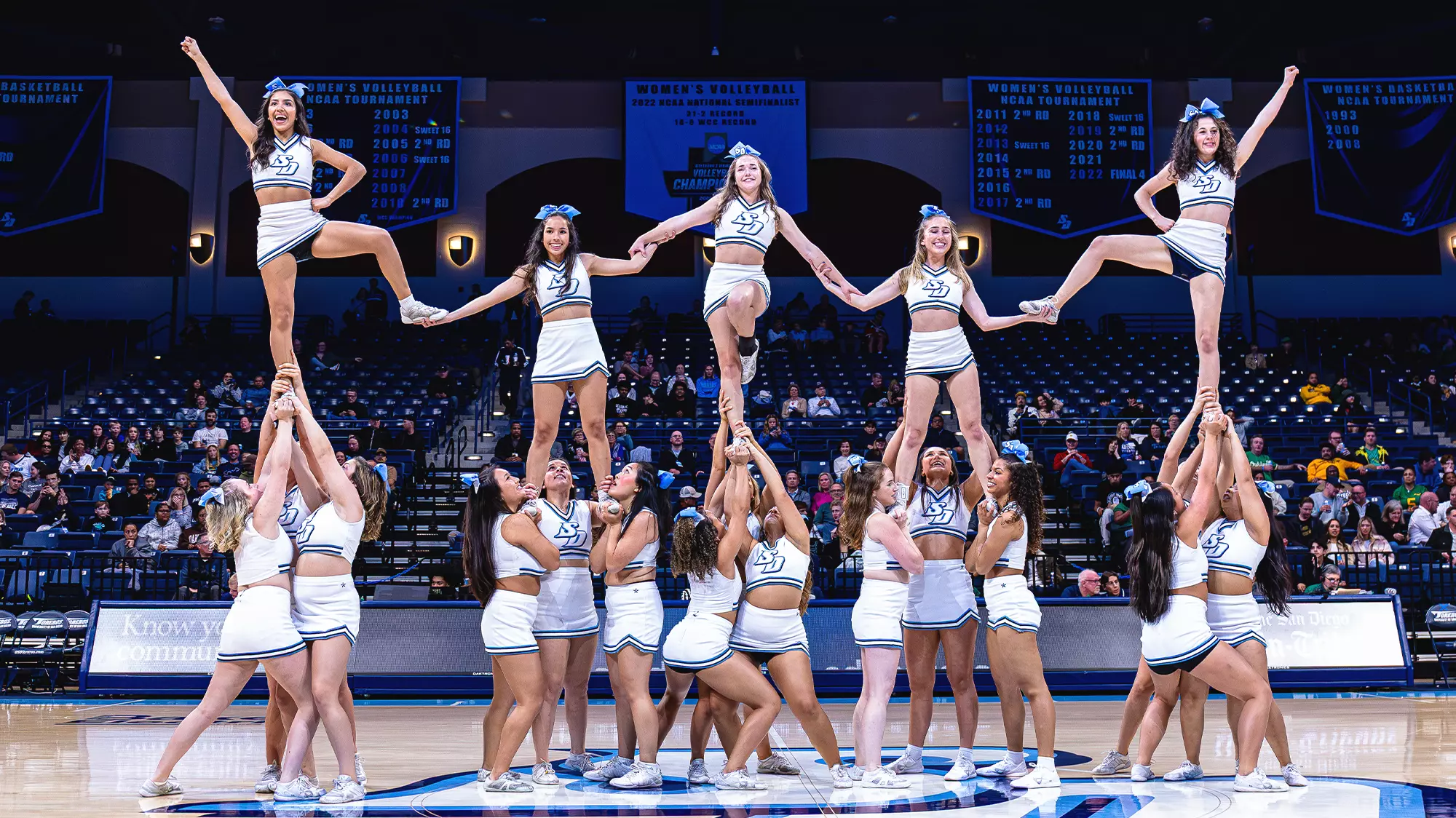
College cheer programs exist across several athletic divisions in the United States. The division level often affects school size, athletic resources, and travel schedules. Division I programs are usually the most visible, but they are not always the best fit for every student.
Many large universities compete in Division I, while smaller campuses may belong to Division II, Division III, NAIA, or NJCAA junior college conferences. Junior college standouts include Trinity Valley Community College, with 16 NCA titles, and Navarro College, widely known for its two-year program. Each level gives athletes a real opportunity to train and compete at the collegiate level.
What Colleges Have D1 Cheer
Many Division I schools sponsor cheer programs that perform at football and basketball games and also compete at nationals. These programs typically train year-round and recruit athletes with strong tumbling and stunt skills.
Here are 60 of the 291+ NCAA Division I schools that field a cheerleading program:
- Alabama
- Arizona State
- Arkansas
- Auburn
- Baylor
- Boise State
- Boston College
- Brigham Young (BYU)
- California, Berkeley
- Central Florida (UCF)
- Cincinnati
- Clemson
- Colorado
- Duke
- Florida
- Florida State
- Georgia
- Georgia Tech
- Houston
- Illinois
- Indiana
- Iowa
- Iowa State
- Kansas
- Kansas State
- Kentucky
- Louisiana State (LSU)
- Louisville
- Marquette
- Maryland
- Miami (FL)
- Michigan
- Michigan State
- Minnesota
- Mississippi (Ole Miss)
- Mississippi State
- Missouri
- Nebraska
- North Carolina
- North Carolina State
- Northwestern
- Notre Dame
- Ohio State
- Oklahoma
- Oklahoma State
- Oregon
- Penn State
- Pittsburgh
- Purdue
- Rutgers
- South Carolina
- Southern California (USC)
- Stanford
- Syracuse
- Tennessee
- Texas
- Texas A&M
- Virginia
- Virginia Tech
- West Virginia
These schools appear often in national competitions and are commonly mentioned when people discuss the strongest Division I programs.
Division II and Division III Cheer Programs
Division II and Division III schools also maintain organized cheer programs. These may have smaller campuses, but they still support structured training and real competition opportunities.
Examples include:
- Grand Valley State University (Division II)
- West Texas A&M University (Division II)
- Endicott College (Division III)
- Rowan University (Division III)
Many of these schools compete in national college cheer championships and maintain strong team traditions.
NAIA Cheerleading Programs
The NAIA has run its own Competitive Cheer National Championship since 2017, and it was the first college athletics association to sponsor a dedicated national championship for the sport. The event typically features 15 qualifying teams competing each March.
Saint Ambrose University holds the most titles in program history, with three championships, while Xavier University of Louisiana has won twice, most recently in 2026.
Examples of NAIA cheer programs include:
- Oklahoma City University
- Missouri Baptist University
- St. Ambrose University
- Midland University
You can see the full championship history and qualifying teams on the NAIA’s competitive cheer page.
Types of College Cheer Programs
College cheer programs can have different goals. Some focus mainly on school sports events, while others focus on national competition.
Game Day Cheer Teams
Game day squads perform cheers and short routines at football and basketball games, focusing on crowd engagement over competition scoring.
Competitive Cheer Teams
Competitive squads train primarily for national events such as UCA and NCA College Nationals. Athletes in competition cheer spend the season practicing stunts, tumbling passes, and full team routines built to a strict time limit.
STUNT Cheer Programs
STUNT is a related discipline built on cheer’s technical skills (partner stunts, pyramids, tosses, tumbling) and is competed head-to-head rather than judged. In January 2026, the NCAA approved it as an official championship sport, its 94th, with the first NCAA STUNT Championship set for spring 2027. Until then, California Baptist and Oklahoma State are among its top programs under USA Cheer’s own national championship.
Best Colleges for Cheerleading Scholarships
Some schools offer financial aid for cheer athletes, though rules vary by division and by school.
Types of Cheer Scholarships
Scholarships are typically partial rather than full-ride, and understanding how much a scholarship can cover helps students plan their college budget before committing to a program.
Which Colleges Offer Cheer Scholarships
Division I, NAIA, and many NJCAA junior college programs are the most likely to offer scholarship dollars for cheer. Division II and Division III programs offer scholarships less consistently, though some do provide partial awards.
How Scholarships Are Awarded
Coaches typically review tumbling ability, stunt skills, teamwork, and grades when choosing scholarship athletes. Returning scholarship amounts can change from year to year based on performance and roster needs.
Can You Get a D1 Offer for Cheer?
Yes, some students can receive strong recruiting interest from Division I cheer programs, but many teams still rely heavily on tryouts rather than traditional offers.
How College Cheer Recruiting Works
Athletes typically send highlight videos to coaches or attend evaluation camps run by UCA, NCA, and individual programs, where skills are assessed directly. Our College Sports Recruiting guide covers the broader recruiting process, and you can learn how to reach out effectively with our guide to writing an email to a college coach.
Typical Skills Coaches Look For
Coaches closely evaluate tumbling ability, stunt technique, strength, and coordination, as well as how an athlete performs under pressure during a timed routine.
When Cheer Recruiting Starts
Preparation often begins in high school when athletes join competitive cheer teams.
Less Competitive College Cheer Options
Some colleges offer cheer teams with larger rosters or club squads. These groups often focus more on school spirit than competition.
Factors That Affect Cheer Tryouts
Skill level, roster size, and team goals can all influence tryout results, and requirements vary widely from one school to the next.
Schools With Larger Cheer Rosters
Large universities sometimes support more than one squad, which generally makes them among the easiest college cheer teams to make. A bigger roster means more open spots and more room for athletes still developing advanced tumbling or stunt skills.
Club and Spirit Squad Options
Some campuses offer club-level teams or spirit squads that perform at campus events without the year-round competition schedule of a varsity program.
How to Research Cheerleading Colleges
Research helps students compare programs and understand expectations before applying through the university application process. When comparing programs, students often look at division level, scholarship options, team structure, competition circuit, practice demands, and support from the athletic department.
Directories from groups such as USA Cheer and official university athletics websites can help students find current program details and contact information. Choosing a cheerleading college also involves admissions fit, not only athletics.
At CollegeCommit, our college admissions advisors help students understand how athletic interests connect with the college admissions process. Our advisors provide educational consulting that covers application planning, academic fit, and decision timelines while supporting informed choices about college pathways.


