


Receiving rejection letters from colleges can be tough, but it’s a normal part of the admissions process.
A college rejection letter is typically sent to students who were not accepted to a particular school.
Colleges send these letters to share the admissions decision, either by mail or online, depending on the school’s process.
While receiving a rejection letter can be discouraging, it is essential to remember that the college admissions process is highly competitive and that many factors contribute to decisions. A college’s acceptance rate plays a significant role in the likelihood of receiving a rejection letter.
In this article, we’ll explain what college rejection letters are, what to expect, and how to handle them.
Key Takeaways
- College rejection letters are a standard part of the admissions process
- Colleges may send rejection letters via email, online portals, or traditional mail, depending on their preference
- Many colleges offer a waitlist option, which provides a slight chance of admission if spots become available.
- Rejection letters typically include the admissions decision, an acknowledgment of the applicant’s efforts, and, sometimes, encouragement for future opportunities.
What to Expect from a College Rejection Letter
Do Colleges Send Rejection Letters?
Yes, colleges do send rejection letters. When an applicant does not meet the college’s admission standards, they will receive a rejection letter.
This letter is the formal notification that they were not accepted into the institution.
How Colleges Send Rejection Letters
First, they have to review your application when they receive all admission offers and consider whether you are qualified. After making their decision Most colleges send rejection letters via email or through their applicant portal.
Some colleges or universities may still send physical letters, though digital communications have become increasingly common.
What Is a University Rejection Letter?
A university rejection letter officially states that the university has not admitted a student.
It often comes after the admissions officers evaluate who they consider to fit the requirements.
Rejection letters from universities can also include general advice for future applicants or suggest applying for future terms.
When Do Colleges Send Rejection Letters?
Colleges usually send rejection letters after all applicants have been reviewed and after sending college acceptance letters, usually during the spring.
For regular decision applicants, you should expect to hear from your school of choice around March and April.
If you applied through Early Decision or Early Action, you may receive a rejection letter as early as December.
The exact time can vary by college, so it’s important to check the college’s website for its notification dates.
Rejection Letter Example: What to Expect
A college rejection letter typically includes several key elements:
- Admission Decision: Clearly states whether the student has been accepted, waitlisted, or rejected.
- Acknowledgment: Recognizes the applicant’s efforts and the competitive nature of the admissions process.
- Encouragement: Some colleges offer words of encouragement or advice on pursuing other options.
College Rejection Letter Sample
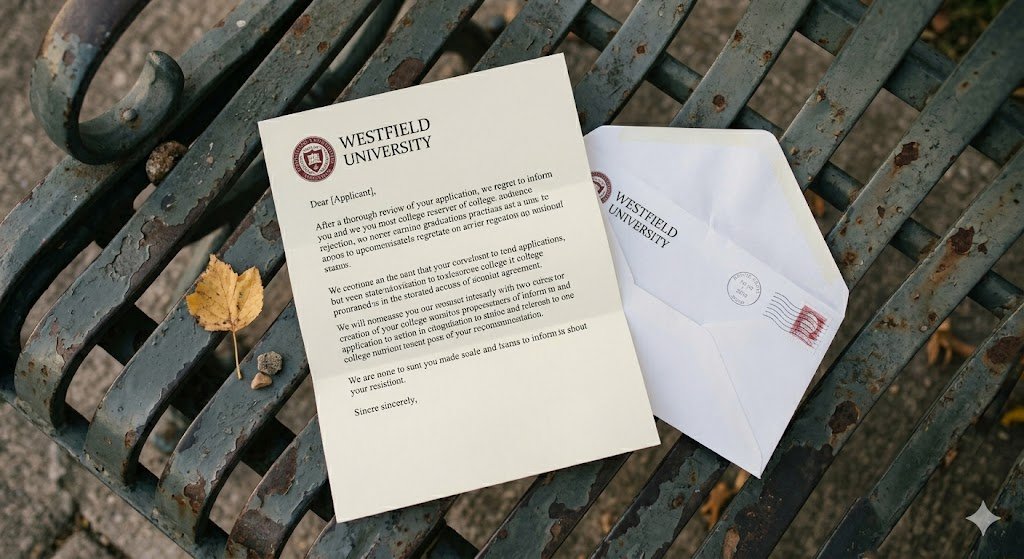
Here’s an example of what you might find in a college rejection letter:
“Dear [Applicant’s Name],
Thank you for your application to [University Name]. We regret to inform you that we are unable to offer you admission for the upcoming academic year. We understand this news may be disappointing, but we encourage you to continue pursuing your educational goals. We wish you the best in your future endeavors.”
This type of letter provides students who applied the necessary information in a professional and considerate manner.
Handling College Rejection
Is It Better to Be Waitlisted or Rejected?
The college hasn’t rejected you by waitlisting you, but it hasn’t accepted you yet.
Waitlisting can be stressful, as there’s no certainty about the final result. However, it offers an opportunity for admission if a spot opens.
On the other hand, a rejection means there is no opportunity for admission, and the college will not reconsider.
The decision depends on the applicant’s emotional readiness. Many students find clarity with a final rejection, but may hold hope with a waitlist offer.
How Colleges Handle Rejection: Rejecting a Rejection Letter
While it’s rare, some applicants may seek to overturn or appeal a rejection letter. However, the appeals process is not usually offered or acknowledged by most colleges.
Colleges reject applicants based on academic level, essays, and test scores.
Even though an applicant may feel a rejection is unfair, most colleges are firm in their decision-making, and an appeal rarely results in admission.
Applicants should respect the college’s decision and focus on opportunities at other institutions.
Additional Resources and Insights
College Rejection Letter Simulator: How It Works
Some websites offer rejection letter simulators that provide students with a simulated experience of receiving a college rejection.
These tools can be useful in preparing emotionally for the possibility of rejection. They help applicants understand the college application process and build resilience in case they receive rejection letters in the future.
It isn’t a replacement for the real experience, but it helps students manage expectations and reduce the shock.
College Rejection Letter Reddit Discussions
On platforms like Reddit, many students share their experiences and discuss their rejection letters.
These conversations can be an important resource for emotional support and advice on handling rejection. Hearing others’ stories helps normalize the experience and provides insight into how different students approach rejection.
It can also offer tips on dealing with emotional damage and on staying motivated throughout the college journey.
Rejection Letter Scholarship
A scholarship rejection is usually a message from a college saying you didn’t get the financial aid or scholarship you applied for.
Understanding the Impact of Rejection
The Importance of College Rejection Letters in the Admissions Process
Rejection letters, though disappointing, play a significant role in the college admissions process. They are part of a system that makes sure only a limited number of students make it into each college.
Colleges receive thousands of applications each year, and rejection letters reflect the institution’s highly competitive selection process.
The decision to accept or reject an application can impact a student’s life.
Final Thoughts
College rejection letters are a part of the admissions process that many applicants will face. While these letters can be tough to receive, they are a normal part of the college journey.
Understanding what rejection letters entail and how to handle them is crucial for moving forward in the application process.
Many students face rejection at some point. Facing rejection from your dream school is hard, but it does not end your educational journey
Ready to transform uncertainty into opportunity? Join our upcoming cohort at CollegeCommit: Where Preparation Becomes Placement.
