


Letters of recommendation work by giving colleges a third-party view of a student’s academic ability, work habits, and personal qualities. In most cases, a teacher, counselor, or mentor writes the letter and explains how the student performs in class, approaches challenges, and interacts with others.
Admissions officers read these letters alongside transcripts, essays, and extracurricular activities to get a fuller picture of what colleges look at besides grades
During Early Action, Early Decision, Restrictive Early Action, or Regular Decision, recommendation letters can help colleges understand whether a student may be a good fit for their academic community.
Key Takeaways
- Letters of recommendation are written by teachers, counselors, or mentors who know the student well. They help the admissions office understand the student’s work habits, character, and classroom behavior beyond grades and test scores.
- Colleges read recommendation letters together with transcripts, essays, and activity lists. This helps them understand how a student learns and participates in school.
- Strong recommendation letters include clear examples of a student’s work ethic, participation, and personal qualities seen in class or school projects.
- Students should ask for recommendation letters early and share helpful materials, such as a résumé or an activity list. This gives the writer enough time to write a thoughtful letter.
- Most colleges ask for two teacher recommendations. Admissions readers usually prefer a small number of detailed letters rather than many similar ones.
How Letters of Recommendation Work in College Admissions
Letters of recommendation help colleges understand a student beyond grades and test scores. In most cases, a teacher, counselor, or mentor writes the letter based on direct experience with the student. The letter explains how the student learns, participates, and works with others.
Colleges review recommendation letters with transcripts, essays, and activity lists. This helps the admissions office see whether the student may be a good fit for the school. A strong letter of recommendation adds context by showing qualities that may not appear in academic records alone.
Good letters of recommendation include specific examples. A teacher may describe class participation, effort, work ethic, or how the student handled a challenging assignment. These details help admissions readers understand the student’s academic readiness, personal qualities, and potential.
Why Are Letters of Recommendation Important for College?
Letters of recommendation help colleges understand the context behind a student’s grades. They show how the student performs in class, approaches challenges, and works with others. This gives the admissions office a clearer view of the student’s academic habits and personal qualities.
Strong recommendations also reinforce other parts of the application. When the letter supports the strengths shown in essays, activities, or transcripts, the student appears more consistent and credible. This can help colleges decide whether the applicant is a good fit for the school.
Who Writes Letters of Recommendation?
Teachers and Academic Recommenders
Most colleges prefer recommendation letters from teachers. Teachers see how students learn and complete assignments over time. They observe class participation, preparation, and progress.
Teachers can explain how a student approaches complex topics. They may describe class projects or discussions. These examples help colleges evaluate academic readiness.
Counselors and Academic Advisors
School counselors also write recommendation letters. Their letters often explain the student’s academic path and course choices. Counselors see the student’s growth across several years of school.
They may also discuss activities or leadership roles. Their perspective helps colleges understand the student’s overall development.
Mentors and Employers
Some colleges accept letters from mentors or employers. These writers describe experiences outside the classroom. For example, a mentor may talk about a research project or volunteer work.
Employers may explain how a student manages tasks and responsibilities. These letters show how students apply their skills in real situations.
What a Letter of Recommendation Includes
Academic Performance and Work Habits
Most recommendation letters begin by explaining how the writer knows the student. The writer then describes the student’s work in class. Teachers often discuss effort, participation, and study habits.

These observations help colleges see how students behave in academic settings. A teacher may explain how the student solved a difficult problem or completed a project.
Personal Qualities and Character
Recommendation letters also describe personal qualities such as honesty, responsibility, and teamwork. These traits help colleges understand how the student interacts with others.
A teacher may explain how the student supports classmates or leads group work. These examples show the student’s behavior in everyday situations.
Examples That Support the Evaluation
Strong recommendation letters include real examples. A teacher may describe a project, class discussion, or presentation. These details show how the student performs in practice.
Effective letters also include specific examples that support the evaluation. When writers share real classroom moments, their observations become more convincing. This helps create strong recommendations.
How to Write a Recommendation Letter
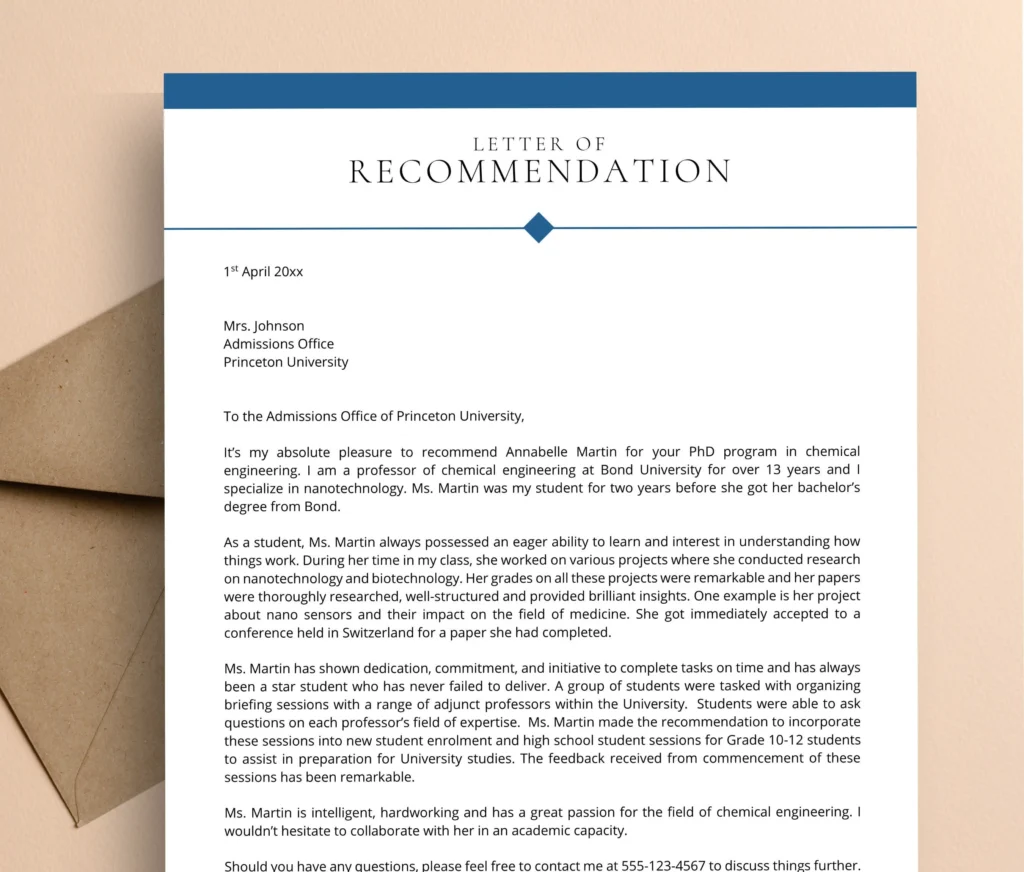
Writing a letter of recommendation is easier when the writer follows a clear process. A strong letter should explain how the recommender knows the student, highlight academic strengths and work ethic, and include specific examples that support the evaluation. The goal is to give the admissions office a clear and credible picture of the student.
Start With the Relationship
Begin by explaining who you are, what you teach or supervise, and how you know the student. This gives the letter context and helps admissions readers understand the writer’s perspective.
Focus on Academic Strengths and Work Ethic
Describe how the student performs in class or academic settings. Strong recommendations usually mention work ethic, participation, responsibility, problem-solving, or improvement over time.
Include Specific Examples
The most effective letters include specific examples from class, projects, discussions, or school activities. These details make the recommendation more personal and more convincing than general praise.
Highlight Personal Qualities
A good letter should also mention personal qualities that matter in school settings, such as curiosity, maturity, teamwork, or leadership. These traits help colleges understand how the student may contribute beyond grades alone.
End With Clear Support and Contact Information
Close the letter with a clear statement of support for the student. The final section should also include contact information in case the college wants to follow up.
includes real observations, clear context, and details that match the student’s role, strengths, and goals.
How Students Should Request Recommendation Letters
When to Ask for a Recommendation
Students should ask early, choose recommenders who know them well, and provide helpful background information. In most cases, asking at least 4 to 6 weeks before the deadline gives recommenders enough time to include specific examples and write strong recommendations.
During peak admissions periods, asking even earlier can help ensure better quality and availability.
Early planning also gives students time to prepare materials. These materials help the recommender write a stronger letter.
Information Worth Providing to your Recommenders
Students often give helpful information to their recommenders. This may include a résumé, activity list, or academic goals. These details help teachers understand the student’s plans.
Providing context also helps writers tailor the letter to specific school applications. For example, a student applying to a science degree program may ask a teacher to mention their research ability.
How Recommendation Letters Are Submitted
How Recommendation Letters Work on the Common App
Many colleges use the Common Application, often called the Common App, to collect letters of recommendation. Students list their recommenders and send requests through the platform.
Teachers receive an email with instructions and upload the letter directly to the system. Students can track the status of each request, including whether the letter has been submitted. However, they cannot see the content of the letter, especially if they waived their right to access it.
Confidentiality and Waiver Policies
Application systems often ask students if they want to waive their right to read the letter. When students waive access, the letter stays confidential.
Many colleges believe confidential letters are more honest. Teachers may feel more comfortable sharing full observations when the letter remains private.
How Letters of Recommendation Work for Undergraduate Admissions
Undergraduate admissions usually request letters from teachers or counselors, although whether recommendation letters are required depends on each school’s university admission requirements. These letters explain how the student performs in class. They help colleges understand students’ learning habits.
The letter becomes one part of the application file. Admissions readers compare it with transcripts, essays, and activities.
How Admissions Committees Evaluate Recommendation Letters
Context for Grades and Academic Records
Recommendation letters help colleges interpret grades and transcripts during admissions review. Teachers can explain course difficulty and expectations.
A teacher might describe how a student improved their study habits or handled a demanding class. This context helps admissions readers understand the academic record.
Insights Into Character and Academic Readiness
Recommendation letters also show how a student works with others. Writers may describe teamwork, responsibility, and response to challenges.
Admissions committees compare the letter with essays and activities because recommendation letters are only one part of what colleges look for in an application; the student profile becomes easier to review.
How Many Recommendation Letters Do Colleges Usually Require?
Most colleges request two recommendation letters from teachers, though requirements vary by school, and understanding how many teacher recommendations are needed for college can help applicants prepare the right number of letters. Some schools allow an extra letter from a counselor or mentor. Colleges usually prefer a small number of strong letters.
Is 4 Recommendation Letters Too Much for College?
Usually, yes. Four letters are often more than a college needs unless each one adds a different perspective.
Common Misunderstandings About Recommendation Letters
Some applicants believe recommendation letters should come from famous people. In reality, colleges prefer letters from people who know the student well. A teacher who worked closely with the student can often write a good letter.
Another misunderstanding is that more letters always help. Admissions offices usually prefer a focused set of written letters that add meaningful insight. Quality matters more than quantity.
Near the end of the admissions process, many families seek guidance about how different parts of an application work together.
At CollegeCommit, families who work with a college application consultant learn how recommendation letters fit into the larger admissions review process so they can approach applications with preparation and informed expectations.