



In college admissions, “direct admission” refers to receiving an admission offer before completing the usual application review process. Automatic admission is a model in which a college determines a student’s eligibility. It uses available academic information, such as grades, coursework, or a student profile.
The offer may come through a platform, school system, or admissions partnership rather than through a full traditional application first. It can simplify college access, but students still need to review conditions, costs, deadlines, and enrollment steps. Because direct admission programs can vary by state, platform, and institution, students should check the specific rules behind each offer.
Table of Contents
ToggleKey Takeaways
- Automatic admission means a college may offer admission before a student completes the standard application process.
- A direct admission offer can still require final transcripts, forms, deadlines, and enrollment steps before the student officially attends.
- Automatic admission is usually non-binding, so students can often compare options before choosing a school.
- Students should review costs, financial aid, scholarships, major requirements, and program rules before accepting any offer.
- Direct admission differs from Early Action, Early Decision, and Regular Decision, as well as from direct entry into a specific major or program.
What Does Direct Admission Mean in College
Automatic admission means a college or university may admit a student because the student already appears to meet basic eligibility requirements. These rules may include academic records, a minimum GPA, graduation status, or other eligibility criteria.
The goal is to reduce friction in the college application process, especially for students who may qualify for admission but have not yet applied. This approach is most common among broad-access schools, regional institutions, and some public higher education systems.
It can help high school students discover options they may not have considered. It does not mean every school uses the same process or evaluates students the same way.
Automatic Admission Offer Meaning
Direct admission offer meaning refers to what the offer actually gives the student. In most cases, it means the student has been identified as admissible by a school based on available information.
The offer may include next steps, deadlines, possible scholarship details, and instructions for submitting final records. Students should confirm all offer terms on the college’s official admissions page before making enrollment decisions.
Some students receive automatic admission offers through platforms where they create academic profiles. For example, a student may enter grades, coursework, interests, and graduation year into a profile-based platform, then receive offers from participating colleges that match those details. The offer should always be read carefully because it may still require verification before enrollment.
Does Direct Admissions Mean You Are Accepted
Does automatic admissions mean you are accepted, depending on the wording and conditions of the offer? In many cases, the student has been admitted if the information used to make the offer is accurate. The school may still require final transcripts, proof of graduation, or completion of required forms.
A direct offer is not the same as enrolling. Students receive an admission opportunity, but they still need to decide whether the school fits their academic, financial, and personal goals. They should also check whether application fees, deposits, placement tests, or housing forms apply.
How Automatic Admission Works
Automatic admission usually starts when colleges and universities review student data through an approved source. This may include GPA, course history, graduation year, state residency, intended major, or other academic details. Students who meet the school’s baseline standards may receive an offer without first submitting a full application.
Admissions officers may still review records before final enrollment. Some offers apply to the general school, while others apply to a specific admission program. This matters because entry into a major, an honors track, or a limited-space program may require additional review.
Direct Admissions on Niche
Automatic Admissions on Niche refers to offers that may appear through a student’s profile on the Niche platform. A student can enter academic and personal information, and participating colleges may identify the student as eligible. The student still needs to review each offer and follow the college’s next steps.
Automatic Admissions on the College Board
Direct admissions College Board searches usually refer to programs or partnerships connected to student data and college matching. The exact process can vary by year, state, and partner school. Students should verify details directly with each participating institution before making decisions.
Is Direct Admission Good for Students
Automatic admission can be good for students who want more options with less uncertainty at the start of the process. It may show incoming students that they have real college pathways before they complete every traditional application. This can be useful for students who feel unsure about where they qualify.
The trade-off is that direct admission should not replace thoughtful research. A direct offer does not prove that a school is affordable, strong in the student’s intended field, or the best personal fit. Students still need to compare costs, academic support, graduation rates, location, and program requirements.
Is Automatic Admission Free
Direct admission may be free at the offer stage, but that does not necessarily mean the full process is free. Some schools may waive the application, while others may require a fee later for enrollment, housing, testing, or records. Students should review the cost terms before accepting any next step.
Is Direct Admission Binding
Automatic admission is usually not binding unless the school clearly states otherwise. This means students can often compare offers before choosing where to enroll. By contrast, Early Decision is usually binding and requires a stronger commitment if the student is admitted.
Direct Admission vs Standard Admission
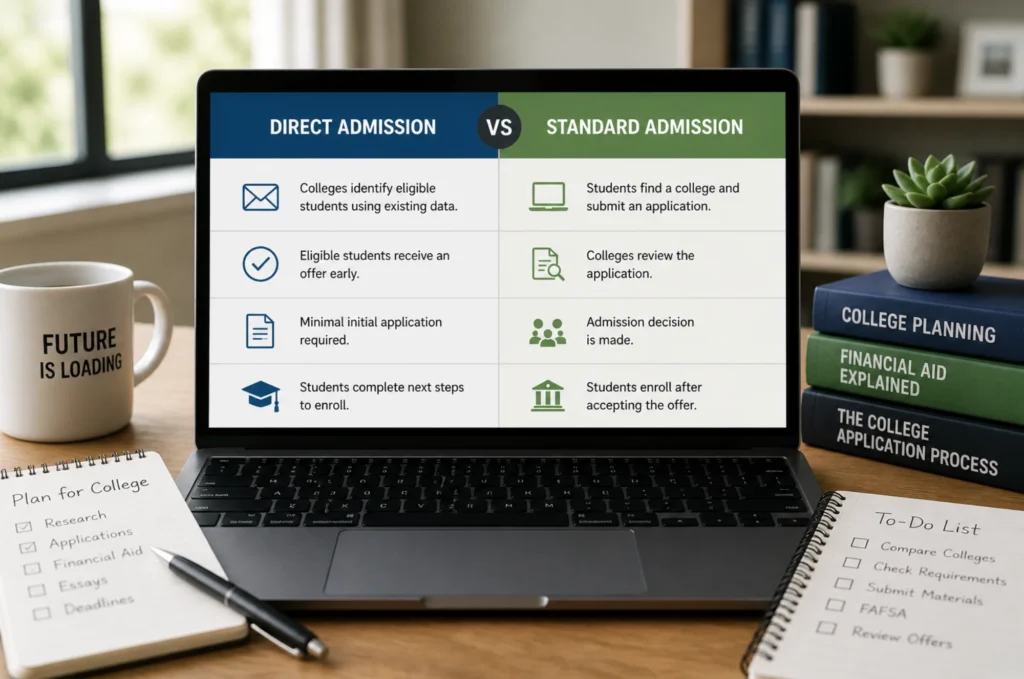
Standard admission usually means a student chooses a school, submits an application, sends the required materials, and waits for a decision. Automatic admission reverses part of that order because the school may identify eligible students first. Both paths can still require final documents before a student enrolls.
In Regular Decision, students apply by a published deadline and receive decisions after the review process is complete.. Early Action allows earlier review without a binding commitment. Direct admission differs because the initial offer may be made before the student completes the full application.
Direct Admission vs Early Action
Early Action requires the student to apply early and wait for the college’s decision, one of several options within a broader early admission scheme. It is usually non-binding, which means the student can compare other options. Automatic admission may not require a full application before the initial offer appears.
Direct Admission vs Early Decision
Early Decision is usually binding, so students should use it only when they understand the commitment, ideally guided by a clear early decision strategy.
Automatic admission is generally more flexible because it often gives students another option to consider. The two systems serve different purposes in the college admissions process.
Direct Admission vs Direct Entry
Direct admission and direct entry are not always the same. Automatic admission usually refers to being admitted to a college based on existing qualifications. Direct entry often refers to entering a specific academic program, major, or professional pathway without a separate later application.
For example, a student may receive immediate admission to a state university but not direct entry into nursing, engineering, or business. Program-level entry can have higher standards than general college admission. This distinction matters most for competitive majors and highly selective programs.
What Students Still Need to Do
After a direct admission offer, students still need to confirm details before enrolling and review a college application checklist to make sure required steps are complete. The offer may simplify the admission process, but it does not replace required forms, financial review, or final school decisions.
- Review the admission offer and deadline.
- Confirm whether the offer is a conditional admission or a final one.
- Please submit the final transcripts and required school records.
- Complete FAFSA and compare financial aid.
- Check whether application fees, deposits, or housing fees apply.
- Review major, program, and enrollment requirements.
- Compare the college with other admission options before deciding.
Transcripts, Forms, and Enrollment
Most schools require final transcripts before enrollment. They may also ask for proof of graduation, residency details, immunization forms, or placement information. Missing paperwork can delay registration even after an offer is made.
FAFSA, Scholarships, and Aid
Students should complete the FAFSA when they plan to use federal, state, or institutional aid, and they should understand whether to apply for financial aid before or after acceptance.
Scholarships may appear with an offer, but aid packages can depend on financial forms and school policy. Comparing net cost gives a better picture than comparing admission status alone.

Limits and Misunderstandings
A direct admission offer does not mean that all conditions have disappeared. The school may still verify grades, request documents, or limit access to certain majors. Students should read the offer as an opportunity, not as a full substitute for research.
One common misunderstanding is that immediate admission always comes from a less competitive school. Some programs use automatic admission to reach qualified students earlier, while others use it to improve access. Official admissions offices and published program requirements remain the best sources for confirming deadlines, conditions, and enrollment rules.
At CollegeCommit, we work 100% online and view direct admission as one part of a wider college admissions planning process, not a replacement for careful decision-making.
Related Articles


