



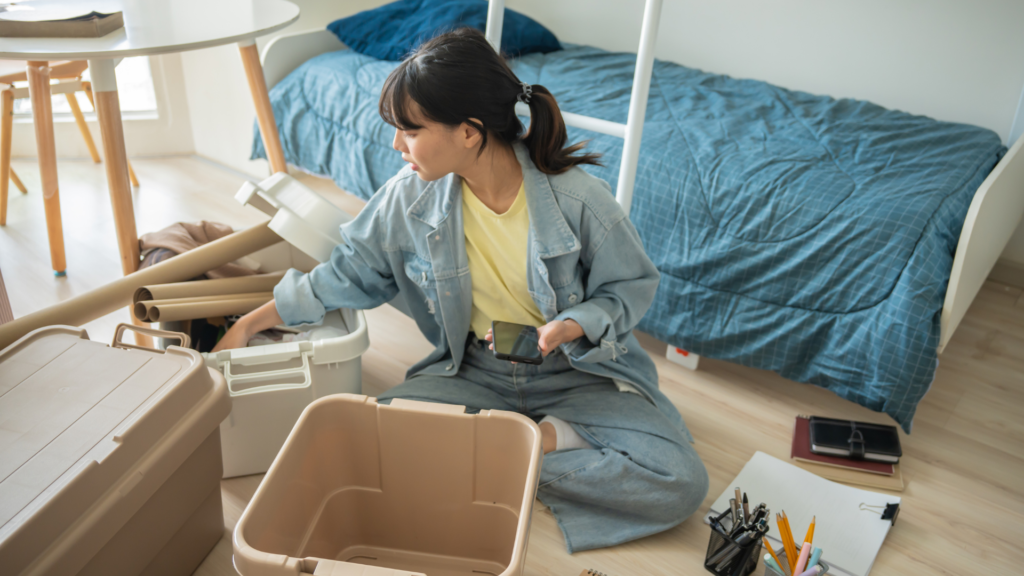
A good move-in plan starts with the items a student will use in the first week, not with every possible extra. A college packing list works best when organized by day.
Most residence halls provide some core furniture, often a bed, desk, chair, and storage piece such as a dresser, wardrobe, or closet space, but students usually need to bring nearly everything else themselves, and exact setups vary by school.
College Move-In Checklist: What to Pack First
A practical college move-in checklist starts with essentials that support sleeping, showering, getting dressed, charging devices, and attending class.
This first group matters most because it covers the items a college student is likely to use on the first night and during the first days on campus.
It also helps reduce stress on move-in day, when time, storage space, and attention are usually limited. Starting with priorities makes it easier to decide what to pack for college without overbuying.
The sections below explain what to pack first, what can wait, and how to keep the process manageable.
Bedding and sleep essentials
Sleep setup is one of the first areas to finish because it affects comfort from the first night. In most dorms, the school provides the bed frame and mattress, but students usually need to bring:
- Twin XL sheets
- pillowcases
- pillows
- comforter or blanket
- mattress topper if the bed feels too firm.
- A second set of sheets can also help during busy weeks when laundry gets delayed.
These are usually some of the first things to bring to college because they are hard to replace once the room gets busy.
Small sleep-related extras can also make the room more functional without adding much clutter. Some examples are:
- A bedside caddy
- Sleep mask
- Earplugs
- Small fan
These are common examples, especially in shared spaces with different schedules. It also helps to pack one small bedside item for evening use, such as a water bottle, an alarm clock, or a phone charger. These are not always essential, but they often improve in the first week.
You may also want to read: First Year of College: What to Expect and How to Prepare
Bathroom and shower basics
Bathroom items should be packed in a simple, portable way.
- A shower caddy
- Towel set
- Basic toiletries
- Shower shoes
- A toothbrush kit and a small toiletry bag
Students should also consider the dorm layout, as communal bathrooms often require carrying everything back and forth each day. Keeping daily-use items together makes unpacking easier and saves time.
Clothes and laundry
Clothing needs depend on climate, access to laundry, and storage space. A smaller rotation is usually better than a full closet, especially during the first part of the school year when routines are still changing.
Pack enough for about one to two weeks, then add seasonal items later if needed. This keeps drawers and closet space usable from the start.
School supplies and study items
Academic items should match the student’s classes and study habits rather than a generic freshman college supply list found online.
Common school supplies include notebooks, pens, folders, a planner, sticky notes, binders, index cards, and highlighters, but some students may need fewer if most work is digital.
Tech and electronics
Most students need only a few core devices, such as:
- A laptop
- Charging cables
- Headphones
- Power strip
Though schools may restrict certain extension products, it is worth checking housing rules first. One focused light source, such as a desk lamp, can also help with reading late at night without disturbing a roommate. Expensive or nonessential electronics can often stay at home until there is a proven need.
You may also be interested in: When Does College Start? Key Dates Explained
Cleaning, storage, and room basics
Cleaning and storage items are easy to overlook, but they make the room easier to manage. A short list of dorm supplies may include:
- Disinfecting wipes
- Paper towels
- Trash bags
- Tissues
- Storage bins
- Drawer organizers
- Hooks
- Under-bed containers that fit the room layout.
Many schools already provide the main furniture, so students should confirm what comes with the room before buying shelves, carts, or replacement furniture. In most cases, the goal is to organize the existing space, not rebuild it.
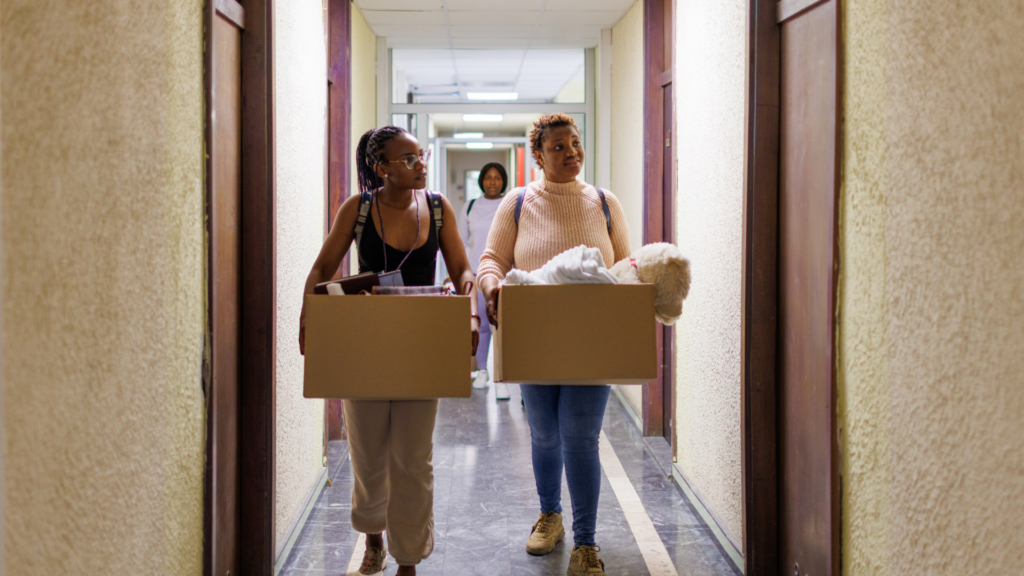
Food and simple meal supplies
Your college dorm room checklist should also include food items that comply with school policy and fit within the available space.
In a standard dorm, this often means having the following:
- Reusable water bottles
- Shelf-stable snacks
- A mug
- Simple utensils
- Food containers
- Napkins and a few easy-to-clean items rather than a full kitchen setup.
Before packing appliances, check what the housing office allows and whether the school already provides items such as a microwave or mini-fridge in some buildings.
This section should stay small at first. Start with the items needed for late-night snacks, quick breakfasts, and basic cleanup. A few containers, a reusable bowl, and simple snacks often go further than a large supply of kitchen items. In dorm living, storage matters as much as utility.
What Not to Bring to College
A good packing plan also includes what to leave out.
- Large furniture
- Duplicate kitchen items
- Prohibited appliances
- Candles
- Weapons
Before buying anything bulky, review the housing rules and ask what is already provided in the room. This step is one of the easiest ways to keep the process efficient and realistic.
The easiest way to avoid overpacking is to sort items by use, not by store section. Start with daily essentials, then review what the school already includes, and remove anything that duplicates a roommate’s items.
You may also want to read: How Long Is a College Semester? Length, weeks, months explained
Check dorm rules before you buy
Dorm rules affect what can be brought, stored, or plugged in.
Some schools limit appliances, candles, extension cords, wall attachments, or large furniture, so a school-specific review should happen before final purchases.
This is especially important for students comparing a residence hall with apartment-style housing. One housing page from the school is usually more useful than several generic blogs.
Coordinate shared items with your roommate
The dorm essentials list should be discussed with the roommate before arrival, especially cleaning tools, snack storage, mirrors, and basic kitchen items.
This prevents duplicate purchases and reduces clutter in a room with limited space. It also makes planning easier for anyone building a packing guide for different living situations, such as a college packing list for girls, guys, or an apartment setup.
The categories may stay similar, but the details often change.

What should you leave at home?
Leave out anything prohibited by housing rules, anything too large for the room, and anything expensive that is not needed right away.
Most students also do better without duplicate storage pieces, duplicate appliances, or too many decorative items during the first move-in. It is easier to add later than to remove clutter after arrival.


