



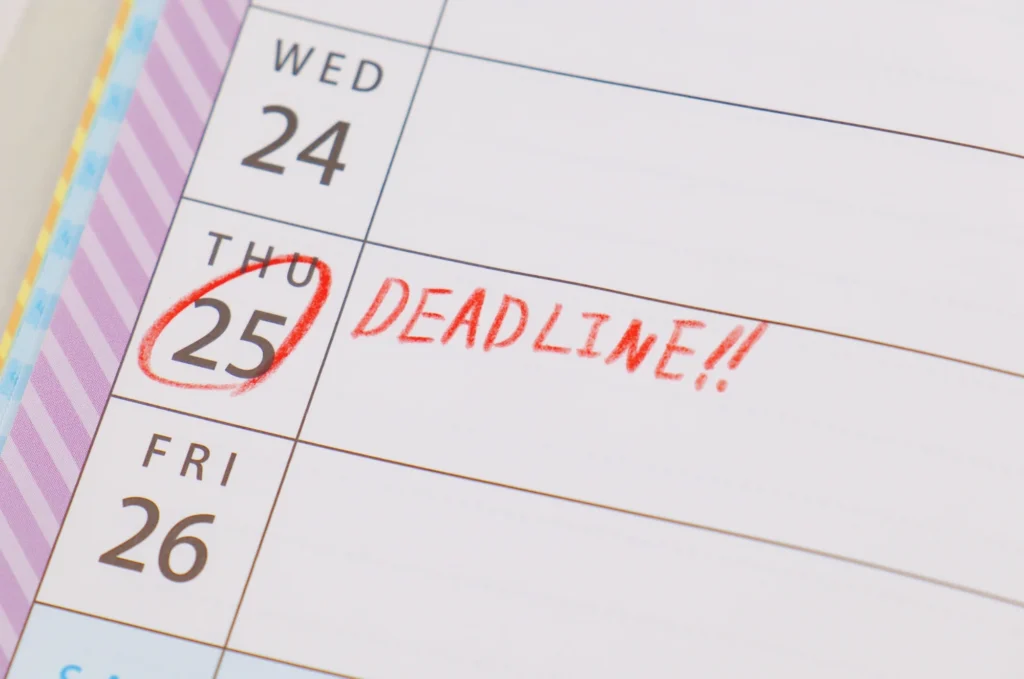
Most graduate school deadlines for fall enrollment are between December and April. PhD programs often close in December or January. Master’s programs often accept applications through February or March. Admissions deadlines vary across institutions, so each department sets its own program schedule.
Missing a deadline by even one day typically means waiting a full year for the next admissions cycle. This guide explains deadlines by program type. It also explains the difference between priority and final deadlines. It shows how to build a realistic schedule for graduate school applications.
Table of Contents
ToggleKey Takeaways
- Most graduate admissions deadlines for fall enrollment fall between October and December, with PhD programs typically closing in early December and master’s programs running through February or March.
- Priority deadlines carry more weight than final deadlines because funding decisions, including fellowships and assistantships, are often made shortly after the priority cutoff passes.
- Programs that use rolling admissions still set final cutoff dates, and waiting until late in the cycle reduces your chances, even if the deadline has not technically passed.
- Financial aid and fellowship deadlines often close months before a program’s application deadline, so researching funding options at the start of your search is more effective than doing it after admission.
- International applicants need at least 18 months of lead time to account for English proficiency testing, transcript evaluation, and visa processing, in addition to standard application requirements.
When Are Graduate School Deadlines?
Graduate school deadlines do not follow a single calendar. Most grad programs set primary deadlines between December and April for fall enrollment, but the exact date varies by department.
Two programs within the same university can have deadlines months apart, so checking each program’s admissions page directly is the only reliable approach.
Grad School Application Deadlines for Fall 2026
For fall 2026 enrollment, most PhD programs close applications in December 2025 or January 2026. Master’s programs run slightly later, with many setting final deadlines between February and March 2026. Some list a priority application deadline in December and a final cutoff one to two months after.
Grad School Application Deadlines for Spring 2026
Spring enrollment deadlines generally fall between August and October of the prior year. Not every graduate program offers spring admission.
If you are still deciding on your entry point, reviewing when college starts can help you map your timeline before committing to a semester. Starting in the spring often limits access to financial aid since most funding is structured around fall enrollment.
Graduate vs. Undergraduate Admissions Deadlines
If you are used to the undergraduate application cycle, you will find graduate admissions less structured. Unlike graduate admissions, applying to college follows a shared academic calendar, with Early Action, Early Decision, and Regular Decision deadlines happening during predictable time periods at most schools.
Early Action, Early Decision, and Regular Decision deadlines make it easier to know when applications are due at most schools.
Graduate admissions works differently. Each department sets its own deadlines, not the university as a whole. Deadlines can vary by months within the same university.
If you are in your senior year and considering a graduate degree, start tracking key program dates early. Do this well before your final semester begins.

PhD vs. Master’s Degree Application Deadlines
PhD programs have earlier deadlines than master’s programs because funding logistics take longer to process. Doctoral graduate students need to be matched with fellowships, assistantships, and grants well before the term begins.
Master’s program deadlines range from January to June for programs using rolling admissions. If you are applying to both degree types, build your schedule around the earlier PhD deadlines.
Priority Deadlines vs. Final Deadlines
Many programs publish two separate deadlines, and understanding when college applications are due explains why that distinction matters more than most applicants realize.
A priority deadline is the date by which applicants are considered for both admission and funding. Programs allocate scholarships shortly after this point, so submitting early puts you in the pool when resources are still available.
The final deadline is the last date a program accepts applications. Admission is still possible after the priority cutoff, but the financial picture is often less favorable by then.
How Rolling Admissions Affects Graduate School Deadlines
Rolling admissions means applications are reviewed as they arrive. This structure rewards early applicants because seats and funding are allocated on an ongoing basis. Most rolling programs still set a final cutoff, and waiting until late in the cycle carries real risk even if the technical deadline has not passed.
Graduate School Application Timeline: When to Apply to Grad School
The general answer to when to submit is straightforward: aim for priority deadlines, which typically fall 12 to 14 months before your intended start date.
The grad school application timeline you build should reflect your target programs, degree type, and testing requirements. Approaching the graduate school application process in structured phases gives each component the time it needs.
12 to 18 Months Out
This is the research phase. Identify your programs of interest, review faculty profiles, and record each program’s deadline and requirements.
This is when you should start applying to grad schools and enter your active planning. Begin building relationships with professors who could write letters of recommendation, since strong letters take time to develop.
6 to 12 Months Out
Draft your statement of purpose and allow time for multiple revisions. Your personal statement should reflect both your academic background and your specific reasons for targeting each program.
Request a recommendation letter from each intended recommender during this window, providing them with at least two to three months’ lead time.
3 to 6 Months Out
Please finalize all application materials and submit by each program’s priority deadline, where possible. If any program requires a writing sample or a preliminary outline of a thesis or dissertation, complete those now. Verify that transcripts and test scores have been received through each program’s portal.
Financial Aid and Fellowship Deadlines to Know
External scholarships and fellowships often close months before a program’s application deadline. Many applicants miss these opportunities by treating funding as an afterthought.
Researching financial aid options at the start of your search gives you the best chance of securing support before those windows close.

What to Expect After You Submit Your Application
Submitting your application is not the end of the process. Most programs offer an online portal where you can monitor submitted documents and confirm that they have received everything.
Decision timelines vary. PhD programs often notify applicants between February and April for fall entry. Master’s programs may respond earlier or later. Some programs conduct interviews before making final decisions, so check whether that step applies to the programs on your list.
What Happens If You Miss a Graduate School Deadline?
Missing a deadline almost always means waiting for the next admissions cycle. If you miss a final cutoff, please contact the admissions office; exceptions are rare. Use any additional time to build a stronger application for the following year, rather than seeking workarounds.
Deadline Considerations for International Applicants
International applicants face more requirements than domestic applicants, and each one carries its own lead time. For students planning on attending graduate school in the U.S. from abroad, starting at least 18 months before your intended start date is the most realistic approach. Key items to plan around:
- English proficiency tests: TOEFL or IELTS scores must be sent directly through the testing agency and received before the program deadline. Schedule the exam well in advance to allow time for a retake if needed.
- Transcript evaluation: Many programs require a formal evaluation that converts your academic records into U.S. equivalencies. This process can take several weeks and should be initiated early.
- Visa processing: F-1 or J-1 visa applications require a Certificate of Eligibility from the institution, which cannot be issued until after admission. Factor this into your overall timeline.
- Funding deadlines: External scholarships for international students often close earlier than domestic funding options, so begin that search in parallel with your program research.
CollegeCommit works 100% online and provides structured guidance for students navigating school application timelines, including those applying to graduate school across multiple programs and international requirements.
Related Articles


