


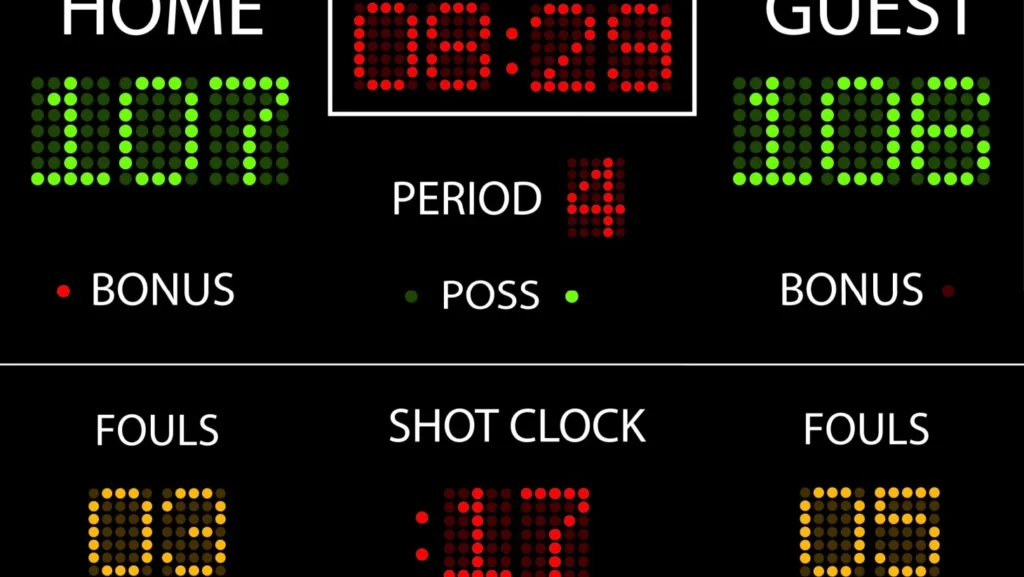
A college basketball game lasts 40 minutes of regulation, but the full event usually runs close to 2 hours. The official format includes two 20-minute halves in men’s play and four 10-minute quarters in women’s play.
People with this query often refer to the total experience from tip-off to final buzzer. The actual duration depends on timeouts, reviews, and overtime. Knowing the difference between official minutes and real-world timing explains how college basketball games are structured.
Key Takeaways
- College basketball games have 40 minutes of regulation time, divided into two 20-minute halves for men and four 10-minute quarters for women.
- Although the official playing time is 40 minutes, most games last about two hours due to clock stoppages, timeouts, reviews, and halftime.
- Halftime typically lasts around 15 minutes, and overtime adds five-minute periods if the score is tied after regulation.
- The game clock stops frequently for fouls, free throws, substitutions, and media breaks, which extend the total event time.
- College game length differs from NBA and high school formats, as NBA games use 48 minutes and high school basketball often uses 8-minute quarters.
How Many Minutes Are in a College Basketball Game?
Regulation time: 40 minutes
The regulation time in National Collegiate Athletic Association (NCAA) competition is 40 minutes. The clock runs during live play and stops when officials call fouls or violations. NCAA college basketball games include 40 minutes of regulation time.
This format differs from the NBA, which uses 12-minute quarters for 48 minutes of play. NCAA games are shorter than NBA games in official playing time. The difference affects strategy and pacing.
How Is College Basketball Regulation Time Structured?
In men’s NCAA play, games consist of two 20-minute halves. Coaches manage substitutions and fouls across these longer segments. The halftime break separates the halves and allows adjustments.
Women’s NCAA basketball uses 10-minute quarters instead of halves. The total regulation time remains 40 minutes. The quarter structure changes foul resets, but not overall length.
How Long Is Halftime?
Halftime usually lasts 15 minutes. This halftime break allows teams to rest and adjust strategy. During major televised events like March Madness, the break can feel longer because of broadcast timing and commercial obligations.
Halftime does not count toward regulation time. It adds to the total event duration. This is one reason the full experience exceeds 40 minutes.
Men’s Halves vs Women’s Quarters
Men’s NCAA Games Use Two 20-Minute Halves
Men’s college basketball traditionally uses 20-minute halves. This has long been the standard format in men’s NCAA basketball. It shapes how teams manage fouls and momentum.
The shot clock runs for 30 seconds per possession. The clock stops on whistles and dead balls. These rules affect the pace of college basketball games.
Women’s NCAA Games Use Four 10-Minute Quarters
Women’s NCAA basketball adopted 10-minute quarters to improve the flow of play. Quarter breaks reset team fouls more often than halves do. This change affects when free throws are taken in bonus situations.
The total regulation time still equals 40 minutes. The format changes, but the total regulation time stays the same. Both formats follow NCAA timing standards.
These timing rules are part of a broader NCAA framework that also includes eligibility and whether college athletes get paid.
How Long Is a College Basketball Game in Real Time?
Most college basketball games last about 1 hour and 45 minutes to 2 hours in real time.
How Long Is a Game on Average?
Although regulation time is 40 minutes, most games last about two hours from start to finish. The final duration depends on the pace and stoppages.
A close contest often runs longer than a one-sided game. Reviews and late fouls extend the timeline. Broadcast coverage also increases duration.
Clock Stoppages and Media Timeouts
The clock stops for free throws, substitutions, reviews, and out-of-bounds plays. It also stops during built-in media breaks. Stoppages include fouls, free throws, replay reviews, substitutions, team timeouts, and media timeouts.
Each stoppage adds to the total event time. Because the clock stops frequently, the actual game time exceeds the official game length. That is why many fans assume college games last longer than 40 minutes.
Why Do 40-Minute College Games Last Nearly 2 Hours?
Some viewers compare college play to professional formats and assume it is shorter overall. The 40-minute structure is shorter than the 48-minute NBA games. That difference explains the perception.
However, the total viewing experience often remains near two hours. The distinction lies in official minutes, not total time in the arena. This clarifies how long NCAA basketball games are in context.
How Long Do College Basketball Games Last With Overtime?
Five-Minute Overtime Periods
If the score is tied after regulation time, teams play a five-minute overtime period. Standard timing rules apply, including clock stops. Overtime directly increases the total game length.
These rules apply during the NCAA tournament as well. High-stakes games during March Madness can last more than 2 hours. Each extra period adds time.
Multiple Overtimes
There is no limit to overtime periods. Teams continue playing five-minute segments until one leads at the end of a period. Multiple overtimes can push the event well beyond average.
Multiple overtimes are rare, but they can push a game well past the usual 2-hour mark. They show how much overtime can extend the total event length.
College vs NBA Game Length
NBA Game Length
Professional NBA games consist of four 12-minute quarters. That equals 48 minutes of regulation play. The extra minutes increase scoring and overall duration.
A high school basketball game typically uses 8-minute quarters. That format results in a shorter official duration than in college competition. Comparing structures helps explain differences in pacing.
Key Timing Differences
A college basketball game has 40 minutes of regulation time. Men’s NCAA games use two 20-minute halves, while women’s NCAA games use four 10-minute quarters. In real time, most games usually last around 2 hours because the clock stops for fouls, free throws, timeouts, replay reviews, and halftime. If the game is tied at the end of regulation, overtime adds five-minute periods until one team wins.
For families planning the college path, game schedules are only one piece of the decision. College sports recruiting, admissions, and the difference between scholarships and financial aid also play a role when evaluating college options.
At CollegeCommit, our college coaches help students evaluate how athletics, academics, and admissions timelines intersect. Our guidance is fully online and grounded in informed planning. Ready to transform uncertainty into opportunity? Join our upcoming cohort at CollegeCommit: Where Preparation Becomes Placement.