

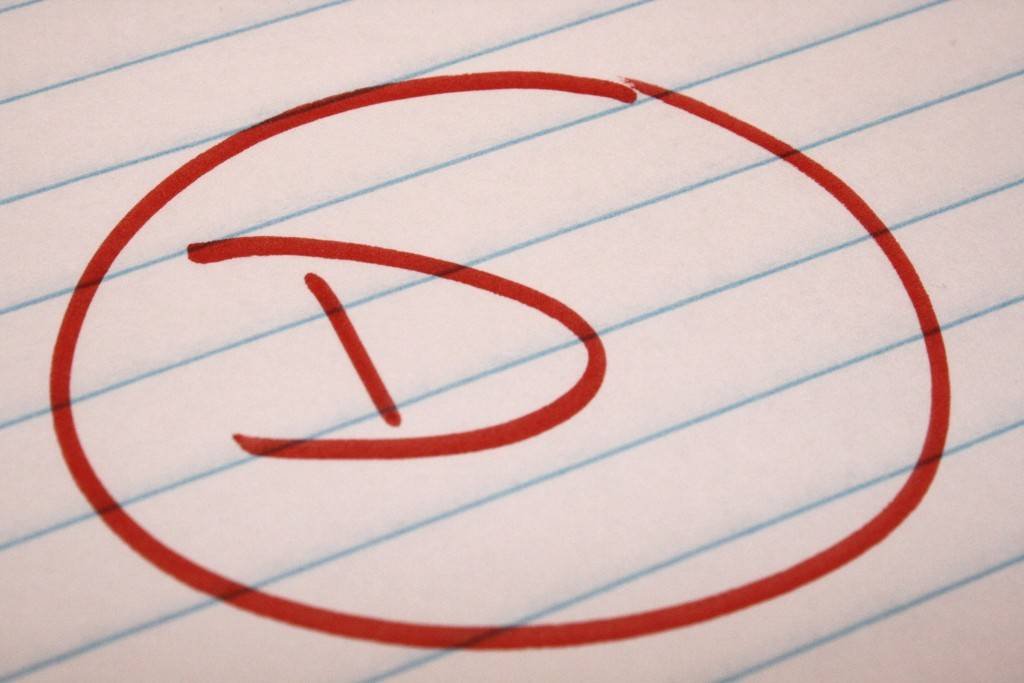
In many colleges, a D is a passing grade, but it may not meet program requirements. This means that the answer depends on the school, the course, and the degree program.
A D may let you earn credit, yet it may not count toward your major. Some programs set higher standards than the general grade system. You must check your school’s policy before deciding on your next step.
Key Takeaways
- A D is often the lowest passing grade in undergraduate courses, but it may not meet major or prerequisite requirements within a degree program.
- Whether a D counts toward graduation depends on the school’s grading scale, department rules, and academic catalog policies.
- A D lowers your grade point average (GPA) and may affect academic probation status, honors eligibility, or financial aid progress requirements.
- Some schools require students to retake courses with a D, especially if the class is required for the major or does not meet progression standards.
- Official sources such as the registrar, academic catalog, and advising offices provide the most accurate guidance, since policies vary across institutions.
Yes – But It Depends on Policy
Most colleges use letter grades within a defined grading scale. In many undergraduate courses, a D is the lowest passing grade. This means you can pass a class and receive credit. However, some majors require a higher course grade, often a C or above.
Your final grade may count as passing at the college level but not at the department level. A faculty member may require a minimum grade for a follow-up class. If that rule applies, a D will not meet the requirement. Policies vary by school and by program.
What Is a D, and What Counts as Passing?
A D is a low but passing mark in most undergraduate settings. It usually signals that the student met the basic course standards but showed limited mastery of the material.
Often, students want to know what a D is in numeric grades. In most colleges, a D falls between 60 and 69 percent. The exact range depends on the school’s grading scale. Each institution publishes its numeric cutoffs in the academic catalog.
What is a passing grade in college?
The answer depends on the context. In many undergraduate programs, a D is a passing grade. In most graduate programs, the standard is higher. Graduate students often need a B or better to remain in good academic standing.
Is a D a failing grade?
In most undergraduate courses, it is not a failing grade. However, in some degree programs, a D does not meet major or prerequisite requirements and may function like a failing mark for progression.
Do You Have to Retake a Class?
You may not need to repeat courses if the D meets the school’s general rules. If the class is an elective, you may keep the grade and move on. But if the D is in a required class for your degree program, you may need to retake it to meet the degree requirements.
Some colleges allow grade replacement. In that case, the new course grade replaces the old one when the school calculates your grade point average (GPA). Other schools count both attempts in the GPA, which can affect academic standing.

Students receiving financial aid must check how repeated classes count toward progress. Financial aid offices review credit completion and GPA. Repeating a course can affect both measures.
Can You Graduate With a D?
In some cases, you can graduate with a D in a general education course. If the school accepts it as passing, it may count toward your total credits. However, many majors require higher grades in core courses.
If a D appears in a key class for your degree program, you may need to retake it. Schools often require at least a C in major courses to complete the required curriculum. The academic catalog explains how each course grade applies to graduation.
For graduate students, rules are stricter. Many graduate programs do not accept a D as passing. A D may require a retake or place the student at risk of dismissal under academic standing policies.
Does a D Transfer to Another College?
A D may be transferred for credit, but acceptance depends on the receiving school. Some colleges accept transfer credit only if the original course grade was a C or higher. Even if a D transfers, it may count only as elective credit and not toward a major.
Transfer policies often differ from internal graduation rules. A course that allowed you to earn credit at one school may not meet requirements at another. Always review transfer guides or speak with an admissions advisor or a college transfer consultant before relying on a D for transfer purposes.
It is also important to review the official transfer application deadline when planning your next steps.
Is Getting One D in College Bad?
One D does not define your academic record. Still, it lowers your GPA because a D carries fewer quality points, which can influence academic standing and decisions about whether GPA matters in college. A lower GPA may affect honors, scholarships, or entry into selective programs.
If your GPA drops below the required level, you may face academic probation. Academic probation is a warning period that requires improvement. Continued low grades can lead to suspension.
Context matters. One low grade among strong letter grades often has a limited long-term impact. Academic dishonesty, however, carries serious penalties and can affect academic standing beyond GPA concerns.
How to Check Your School’s Policy
Policies differ from one college to another. Always review your school’s official documents. The registrar’s website and academic catalog explain the grade system and define the lowest passing grade.
You can also meet with a faculty member or academic advisor. They can explain how your course grade affects your degree program and future classes. Students receiving financial aid should confirm details with the aid office to avoid surprises.
Discussions on Online Forums
Online forums show mixed answers because schools follow different rules. One student may pass a class with a D and move forward. Another student at a different college may need to retake the same class.
Whether you can pass with a D in college depends on the grading scale, department standards, and academic standing policies at each school. Official school documents provide the most reliable guidance.
Quick Summary: When Is a D Passing?
A D is usually considered passing in undergraduate programs, but it has limitations. Whether it works for you depends on the situation:
- It often allows you to earn credit in general education courses.
- It may not meet major or prerequisite requirements.
- It usually lowers your grade point average (GPA).
- It may affect financial aid if it reduces academic standing.
- It is rarely accepted as passing in graduate programs.
The key factor is your school’s published policy.
Final Considerations
A D can allow you to earn credit in many undergraduate programs. However, it may not meet the standards for a major, prerequisite, or graduate program. Its impact on financial aid, academic probation, and graduation depends on school policy.
At CollegeCommit, we help families understand how grades affect academic planning and admissions strategy. We work fully online and focus on carefully reviewing transcripts, requirements, and next steps.
Ready to transform uncertainty into opportunity? Join our upcoming cohort at CollegeCommit: Where Preparation Becomes Placement.
