



The university also has strong programs in economics, mathematics, computer science, engineering, the humanities, and public policy. Its academic model combines the resources of a research university with a strong focus on undergraduate learning.
Table of Contents
ToggleKey Takeaways
- Princeton is known for undergraduate teaching, independent research, and close work with faculty.
- Students complete junior research and a senior thesis or final project, which makes independent work a core part of the academic experience.
- The university is especially strong in public and international affairs, economics, mathematics, computer science, engineering, and the humanities.
- Princeton stands out for its residential colleges, eating clubs, need-based grants, and strong focus on undergraduate life.
- Princeton, Harvard, and Yale are generally viewed as peers, but they differ in academic structure, campus culture, and available programs.
Why Is Princeton University So Famous?
Princeton is one of the oldest and most respected universities in the United States. Its reputation comes from its academic programs, research, public service, and long history. Its graduates include U.S. presidents, writers, scientists, business leaders, and Supreme Court justices. Princeton also reports that 14 students or graduates received U.S. Rhodes Scholarships during the past 10 years.
Princeton had about 5,826 undergraduate students during the 2025–26 academic year. It also reported a 5-to-1 student-to-faculty ratio. This size may give students more chances to take small classes and work closely with professors. The university does not have medical, law, or business schools, so undergraduate education remains a major part of its identity.
What Is Princeton Known For Academically?
Princeton is known for independent academic work. Most Bachelor of Arts students complete at least one junior paper before their final year. Every senior completes a senior thesis or, in some engineering departments, a large independent project. These requirements ask students to choose a question, study evidence, and present their own findings.
This system gives juniors and seniors direct research experience before graduation. Their work may include lab tests, field research, policy studies, historical research, technical design, or creative work. A graduate student may help in a class or lab, but faculty members guide undergraduate research. Students must learn how to plan a project, assess sources, solve problems, and explain their ideas.
Key academic features include:
- Junior research projects
- A required final project or thesis
- Small classes and seminars
- Direct support from professors
- Access to labs, libraries, and research centers
What Major Is Princeton University Known For?
The Princeton School of Public and International Affairs is one of the university’s best-known programs. The major draws from politics, economics, history, science, psychology, sociology, and public policy.
Students study how governments and groups respond to local and global issues. They may also complete fieldwork, language study, or study abroad.
Princeton is also known for economics, computer science, mathematics, physics, engineering, history, politics, and English. Some users search for the Princeton School of Public, but that phrase is only part of the current name. The program was once named after Woodrow Wilson. Princeton changed the name in 2020.
Princeton offers both a Bachelor of Arts and a Bachelor of Science in Engineering. Each major has its own courses, research rules, and degree requirements. A high school student should compare the curriculum, teaching style, and research expectations before choosing a field. Rankings alone cannot show whether a program fits a student’s interests.
What Makes Princeton Unique?
One part of what makes Princeton unique is its focus on undergraduate campus life. Seven residential colleges provide housing, meals, advising, events, and support. These colleges help new students meet peers and adjust to university life. Princeton reports that 96 percent of undergraduates live on campus.
Princeton is also known for eating clubs. These private dining and social groups mainly serve upper-level students. They are separate from the residential colleges that the university runs. Students can also use dining halls, join co-ops, or select other meal options.
Princeton uses need-based grants to help eligible students pay for college. In 2001, it became the first U.S. university to remove loans from its standard financial aid packages. For the Class of 2029, 69 percent of enrolled students qualified for aid, and the estimated average undergraduate grant for 2025–26 was more than $80,000.
Aid depends on family income, assets, and other financial details, so applicants should use Princeton’s net price calculator for a personal estimate.
Princeton’s Campus, History, and Traditions
Princeton began in 1746 as the College of New Jersey. It is the fourth-oldest college in the country, not the oldest college. The school moved to Princeton in 1756 and adopted the name Princeton University in 1896.
Nassau Hall is one of the campus’s best-known buildings. It opened in 1756 and was once one of the largest stone buildings in the American colonies. The Continental Congress met there in 1783, and the building briefly served as the nation’s capital.
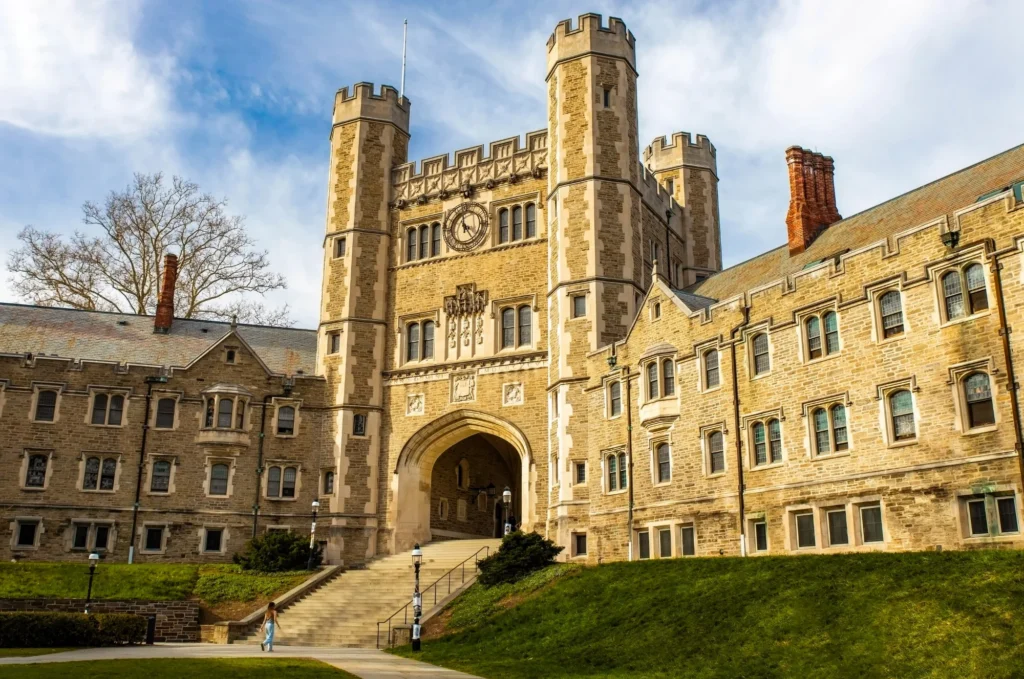
The campus is known for Collegiate Gothic buildings, modern research labs, libraries, and arts spaces. Major traditions include Reunions, the P-rade, and bonfires after certain football wins. More than 26,000 people attend Reunions each year, according to Princeton.
Princeton Fun Facts
These Princeton fun facts show how the university has shaped government, research, and culture:
- Princeton adopted its current name in 1896.
- The campus played a role in the American Revolution.
- Two alumni have served as U.S. president.
- Three alumni currently serve on the U.S. Supreme Court.
- Princeton has more than 100,000 living alumni.
- Albert Einstein worked nearby at the Institute for Advanced Study.
These interesting facts about Princeton University provide context for its academic reputation. They show the university’s ties to public service, research, writing, and national history.
They do not mean that every student will follow the same path. Each experience depends on the student’s major, courses, goals, and campus choices.
Are Princeton, Harvard, and Yale on the Same Level?
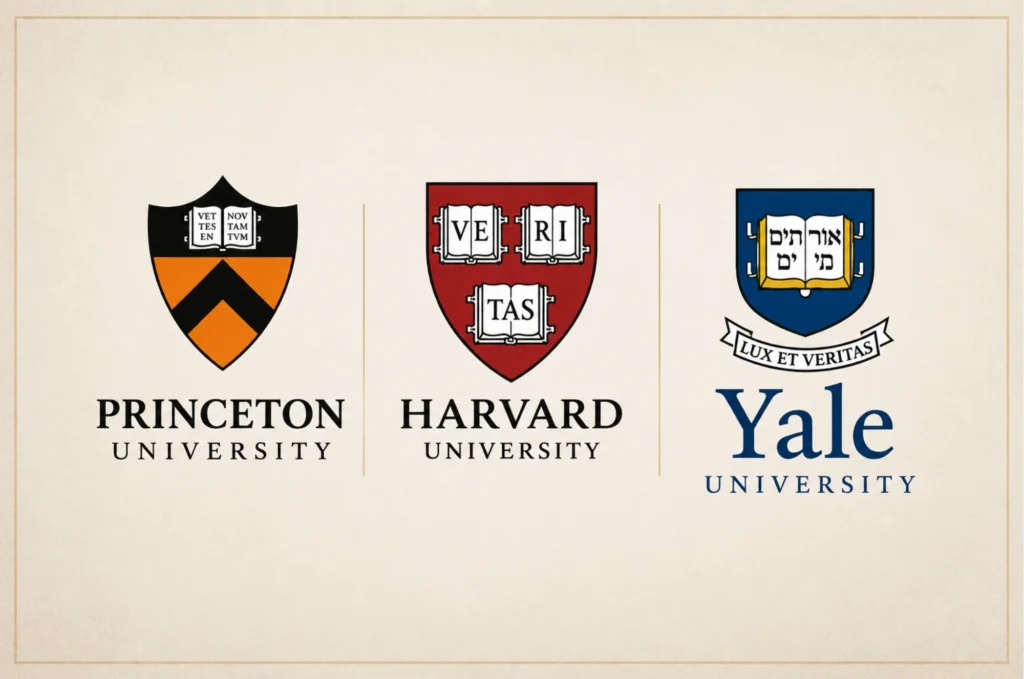
Yes. Princeton, Harvard, and Yale are generally viewed as being on the same academic level. All three are highly selective, have respected faculty, support major research, and are widely known around the world.
The main differences involve academic structure, campus size, culture, and available programs rather than a simple difference in quality.
Princeton places a strong focus on undergraduate teaching and required independent work. Harvard has a larger university system with major law, medical, and business schools. Yale is known for its residential college system, humanities programs, and arts offerings.
Students comparing Ivy League schools such as Harvard and Yale with Princeton should examine majors, cost, location, class structure, and campus life instead of assuming one school is best in every area.
Princeton University Admissions and FAQs
What Is Princeton University’s Acceptance Rate?
For the 2025–26 academic year, Princeton reported 42,303 applicants and 1,868 admitted students. These figures equal an admission rate of about 4.4 percent, a rate that regularly places Princeton among the hardest Ivy League schools to get into.
The rate changes each year as application totals and available spaces shift, so it offers context rather than a forecast for any one applicant. A closer look at how to get into Princeton can help applicants build a stronger strategy beyond the numbers.
What Is Princeton University Best At?
Princeton is strongest in undergraduate teaching, independent research, and close work with faculty. It is also well known for public and international affairs, economics, mathematics, science, computer science, and engineering. Its junior work and final research rules set it apart from many other colleges.
Is Princeton an Ivy League School?
Yes. Princeton is one of the eight Ivy League schools. The Ivy League began as an athletic conference, though the term is now also linked with the schools’ history, academic programs, and selective admissions, which range from Princeton’s low acceptance rate to the far higher rate at the easiest Ivy League school to enter.
Is Princeton Public or Private?
Princeton is a private university. Its own board governs it and receives funding from tuition, gifts, research support, and its endowment. The state of New Jersey does not operate it.
Where Is Princeton University Located?
Princeton is in Princeton, New Jersey, between New York City and Philadelphia. Students can reach both cities by train, though travel time depends on the route and schedule.
What Should Prospective Students Expect?
Students should expect demanding courses, long writing tasks, and independent research. They should also expect a residential campus with more than 500 student groups and many academic, athletic, and social options. Applicants should check current testing and application rules because policies can change between admission cycles.
A detailed Ivy League college admissions guide can help applicants understand common timelines, application parts, and review factors.
Families who want structured guidance can work with an Ivy League admissions consultant like CollegeCommit, which works 100% online and helps families organize college research and application plans. Princeton’s reputation may attract attention, but students should review its programs before deciding if it fits.
They should also compare Princeton with the best non-Ivy League colleges that offer similar academic programs, research options, or campus settings.
They should also check research rules, campus culture, cost after aid, and degree requirements. Verified facts and personal academic needs provide a better basis for comparison than prestige alone.
Clear college admissions strategies can help students organize deadlines, school research, essays, and application requirements.


