



Once financial aid enters the picture, the definition of “cheapest” can shift quickly. A campus with a higher sticker price may cost less after need-based grants are applied, depending on family income and assets.
Princeton also holds the title after aid is applied. Federal data show it has the lowest average net price among the eight, at roughly $15,300 per year, well under a quarter of its published cost.
This article breaks down how pricing really works at these universities. It compares sticker prices to net prices, explains why Princeton appears cheapest by both measures, shows what families at different income levels actually pay, and helps you estimate your own number before applying.
Table of Contents
ToggleKey Takeaways
- The cheapest option depends on how cost is measured, since tuition alone does not reflect what families usually pay after aid.
- The sticker price shows listed charges, while the total cost of attendance includes housing, meals, books, and personal expenses.
- Princeton reports the lowest average net price, at about $15,313, followed by Harvard at roughly $17,525, according to federal IPEDS data.
- Aid at these universities is need-based, so your net price depends more on household income and assets than on which campus you choose.
- International students often face higher costs because aid options are more limited at several institutions.
- Net price calculators offer the most accurate way to estimate real cost before applying.
What Are the Ivy League Colleges?
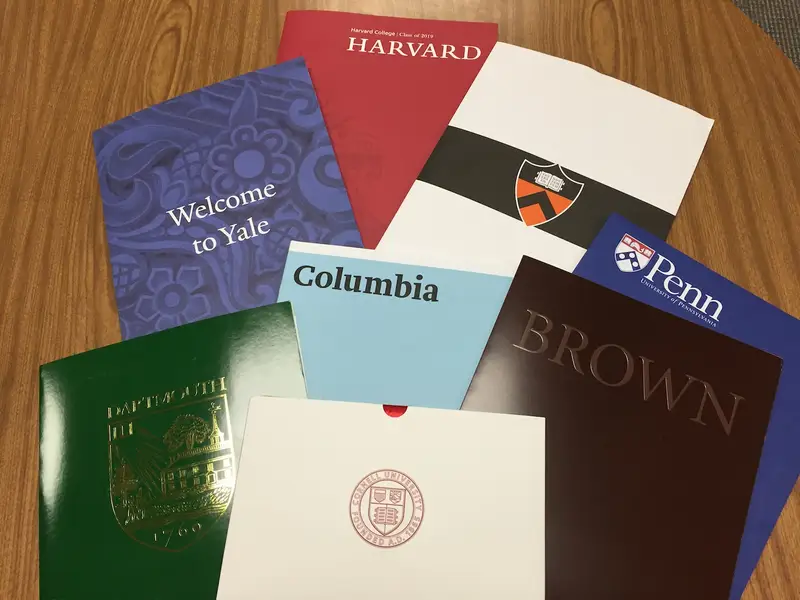
The group includes eight private universities in the Northeastern United States: Brown, Columbia, Cornell, Dartmouth, Harvard, Princeton, the University of Pennsylvania, and Yale. All eight are need-blind for domestic applicants and meet 100 percent of demonstrated financial need.
None of them award merit or athletic scholarships. Every dollar of undergraduate aid is based on financial circumstances, which is why two students on the same campus can pay very different amounts. For a fuller breakdown of the group and the schools often mistaken for members, see our guide to the 12 Ivy League schools.
What Is the Cheapest Ivy League School?
Based on published tuition and fees, Princeton University reports one of the lowest base tuition figures among the eight. For the 2024–2025 academic year, undergraduate tuition is about $59,710. This figure covers tuition only and excludes housing, meals, and other required costs.
Princeton keeps the lead once aid is applied. Its no-loan program, introduced in 2001, replaced borrowing with grants that never need repayment, and roughly two-thirds of undergraduates receive institutional grant aid.
That said, the lowest cost for your household may be a different campus entirely. Aid formulas differ, and income, assets, and family size drive the final number more than the name on the letterhead.
Ivy League Tuition Costs and Total Price
Understanding the cost of Ivy League schools means looking beyond a single number. Tuition covers classroom instruction, but students pay many other required expenses. These include housing, meal plans, books, health insurance, and personal costs.
Together, these charges form the total cost of attendance. Universities use this amount when they calculate financial aid. It gives a fuller picture of expected cost before aid is applied.
Ivy League Schools – Estimated Sticker Prices (2025–2026)
| University | Location | Estimated Sticker Price |
|---|---|---|
| Harvard University | Cambridge, MA | About $86,366 |
| Princeton University | Princeton, NJ | About $87,750 |
| Brown University | Providence, RI | About $88,948 |
| Dartmouth College | Hanover, NH | About $91,312 |
| Yale University | New Haven, CT | About $91,950 |
| Cornell University | Ithaca, NY | About $92,150 |
| University of Pennsylvania | Philadelphia, PA | About $92,288 |
| Columbia University | New York, NY | About $93,417 |
Figures reflect published cost of attendance before financial aid and typically include tuition, housing, meals, fees, books, and estimated personal expenses. Cornell figures reflect endowed colleges; New York residents in contract colleges pay less. Institutions calculate expenses differently, so totals vary slightly between sources.
These amounts reflect the sticker price, the cost listed before financial aid is applied. Actual charges can vary based on housing choices, program details, and whether a student carries outside health insurance.
Most students do not pay the full sticker price. Aid substantially lowers costs for eligible families, and roughly half of undergraduates at each campus receive institutional grants.
Most and Least Expensive Ivy League Schools
When comparing Ivy League schools, location matters. Campuses in large cities often carry higher housing and living costs than those in smaller towns. This can raise the total price even when tuition is similar.
At the higher end, Columbia University and the University of Pennsylvania often appear more expensive. Their urban settings increase housing and daily costs. At the lower end, Harvard University and Princeton University typically report the lowest before-aid totals.

What Families Actually Pay: Average Net Price
Net price is the number that matters most. It represents total cost of attendance minus all grant and scholarship aid, showing what a student pays out of pocket through family contributions, savings, work-study, or borrowing.
The U.S. Department of Education tracks this figure through IPEDS for first-time, full-time undergraduates who receive grant or scholarship aid. The gap between sticker price and net price is dramatic across all eight campuses.
| University | Average Net Price | % Receiving Institutional Grants | Average Grant |
|---|---|---|---|
| Princeton University | $15,313 | 66% | $66,054 |
| Harvard University | $17,525 | 56% | $68,015 |
| Dartmouth College | $20,322 | 47% | $65,392 |
| Yale University | $22,408 | 56% | $65,892 |
| Columbia University | $22,520 | 52% | $63,956 |
| University of Pennsylvania | $23,570 | 51% | $62,120 |
| Brown University | $26,256 | 52% | $59,626 |
| Cornell University | $26,361 | 48% | $61,779 |
Source: NCES College Navigator / IPEDS, 2023–2025, full-time beginning undergraduates receiving grant or scholarship aid.
Princeton leads at $15,313, reflecting the depth of its no-loan program. Even at the higher end, Brown and Cornell land near $26,000, still under a third of their published price.
These averages blend every income level together, so no single family should expect to pay exactly this amount. The next section breaks the same data down by household income.
Ivy League Tuition Based on Income
Tuition is not a flat rate at any of these universities. What a household pays tracks income and assets far more closely than campus choice. Federal reporting requirements make this visible bracket by bracket.
| University | $0–$30,000 | $48,001–$75,000 | $75,001–$110,000 | $110,001+ |
|---|---|---|---|---|
| Princeton University | ~$0 | $1,217 | $4,478 | $36,094 |
| Dartmouth College | ~$0 | $2,695 | $8,534 | $52,036 |
| Harvard University | $8,697 | $2,091 | $9,941 | $53,337 |
| Columbia University | $4,570 | $5,866 | $11,782 | $50,621 |
| Yale University | $17,633 | $17,943 | $12,558 | $45,951 |
| Cornell University | $1,776 | $6,796 | $14,311 | $49,992 |
| Brown University | Not reported | $5,858 | $16,219 | $44,937 |
| University of Pennsylvania | Not reported | $10,439 | $25,476 | $55,972 |
Source: NCES College Navigator / IPEDS, 2024–2025, students receiving Title IV federal aid. Small sample sizes in low-income brackets can skew individual figures upward; several universities publish policies stating that families under $100,000 pay nothing toward tuition. "Not reported" means the sample was too small to publish without compromising student privacy.
Two patterns stand out. Princeton posts the lowest figure in every bracket, and even households above $110,000 receive discounts of roughly $35,000 to $50,000 off the published price at most campuses.
For a family earning between $75,000 and $110,000, the spread between the most and least affordable option exceeds $20,000 per year. Over four years, that difference approaches $84,000, enough to shape where a student enrolls.
How Financial Aid Changes the Cost
Aid is central to affordability here. Each university runs a need-based program, and understanding how to get financial aid for college is key to estimating real costs. Award amounts depend on household income and assets.
All eight promise to meet 100 percent of demonstrated financial need. The institution estimates what a family can contribute and covers the remainder with grants. Admissions decisions for domestic applicants are made without regard to ability to pay.
Several have recently expanded their Ivy League tuition support thresholds, and the published cutoffs now reach well into six figures.
| University | Free Tuition Up To | Loan-Free Packages |
|---|---|---|
| Princeton University | $250,000 (full cost covered up to $150,000) | Yes, since 2001 |
| Harvard University | $200,000 (no cost at all under $100,000) | Yes |
| University of Pennsylvania | $200,000 (all billed expenses under $75,000) | Yes |
| Yale University | Zero parent share under $100,000 | Yes |
| Columbia University | $150,000 (no contribution under $66,000) | Yes |
| Dartmouth College | Zero parent contribution up to $125,000 | Yes |
| Brown University | Awarded case by case, full need met | Yes |
| Cornell University | Awarded case by case, full need met | Under $75,000 with typical assets |
Thresholds assume typical assets and are drawn from each institution's published financial aid policies. Universities revise these figures regularly, so confirm current terms directly with the aid office before making decisions.
None of these universities award merit or athletic scholarships, a point that surprises many applicants. High test scores and strong grades improve admission odds but do not increase an aid package by a single dollar.
Costs for International Students
Costs work differently for applicants from outside the United States. Most of these universities consider financial need when reviewing international applications, and aid options are more limited.
Harvard, Princeton, and Brown extend need-based aid to international students on the same terms as domestic applicants. Others provide more limited support, which can significantly increase the total.
Timing also matters. At several campuses, including Columbia and Penn, international applicants who do not request aid at the time of application cannot add it later, even if circumstances change.
Why the Term “Cheapest Ivy League College” Can Be Misleading
The idea of a single lowest-cost campus is too simplistic. The sticker price shows listed tuition and fees but ignores aid entirely. Reading that number alone leads to wrong conclusions.
Online discussions often compare institutions without context. They may skip income differences and aid formulas. As a result, a campus that is affordable for one household can be costly for another.
The most expensive mistake is self-selecting out. Families see a $90,000 figure, assume it applies to them, and never run the numbers that would have shown a $5,000 or $15,000 result.
The Reality of Costs and Admissions
Cost and admissions selectivity are often discussed together, but they are not connected. Acceptance rates depend on academic records, including weighted GPA, activities, and university requirements, not tuition levels.
A lower price does not make admission easier. rinceton reports both the lowest net price and ranks among the hardest Ivy League schools to get into, and the two figures are unrelated.
Applying for aid does not hurt domestic applicants either. Need-blind admissions means the review committee does not see the aid application when making its decision. For context on how selective each campus is, see our breakdown of Ivy League admission rates.
Online and Graduate Programs
Some of these universities offer online or hybrid graduate programs. These use different pricing systems than undergraduate degrees. Tuition may be lower per course, but aid is often limited.
Graduate funding operates on a separate track entirely. A handful of master’s and doctoral programs, including several in computer science, are fully funded through teaching or research assistantships, meaning tuition is waived and a stipend is paid.
This creates a common misunderstanding. “Fully funded” at the graduate level is not the same as need-based undergraduate aid, and funded programs are frequently more competitive than unfunded ones precisely because the money is attached.
How to Estimate Your Actual Ivy League Cost
Net price calculators offer the most accurate estimates. Federal law requires every institution to provide one, and these tools use household income, assets, and family size to project expenses for the upcoming academic year.
Run the calculator at every campus on the list. Aid formulas differ enough that one estimate can land thousands below another despite nearly identical published prices. The federal Net Price Calculator Center links to each one.
Understand which forms each institution requires. All eight use the CSS Profile alongside the FAFSA, which captures home equity, business ownership, and non-custodial parent income.
Factor in what the estimates miss. Health insurance is required everywhere and is not always covered, and travel, Greek life, and personal spending in expensive cities add up. Comparing these figures against average college tuition nationwide puts the numbers in useful perspective.
Contact aid offices directly if your situation is unusual. Recent job loss, high medical expenses, divorce, or supporting elderly parents are all circumstances these offices are staffed to review individually.
Frequently Asked Questions
Which is cheaper, an Ivy or an in-state public university?
For many households, the private option costs less, which is part of why so many families ask whether Ivy League schools are worth it. A family earning $80,000 might pay between $2,000 and $12,000 per year at most of these campuses, compared with $25,000 to $35,000 at an out-of-state public flagship that does not guarantee to meet full need.
Do outside scholarships reduce the aid package?
Often partly. Many institutions apply outside awards, such as work-study, to reduce the student’s own contribution before applying grant aid. Report outside scholarships as required and ask each aid office how they treat them, since displacement policies vary.
Does a 529 plan hurt eligibility?
Modestly. A parent-owned 529 is treated as a parental asset and assessed at a relatively low rate, so it reduces aid far less than student-owned assets would. Qualified withdrawals are generally not penalized.
Does aid renew each year automatically?
No. Awards are made one year at a time, and families must reapply annually. A stable financial picture generally produces a comparable package, but missing the deadline can delay or interrupt the following year’s aid.
How much do applications themselves cost?
Application fees typically range from $75 to $90 per institution, plus any score-sending charges. Fee waivers are widely available through the Common App and directly from each admissions office for eligible students.
Are payment plans available?
Yes. Most offer monthly plans that spread the remaining balance after aid across several installments, often for a small enrollment fee. Ask the bursar or student accounts office rather than the aid office.
Near the end of the research process, some families seek structured guidance from a college application consultant to interpret cost data and admissions timelines.
At CollegeCommit, we help families interpret aid policies, compare real costs, and align academic strategy with application timing at highly selective universities, much like the guidance an Ivy League admissions consultant offers throughout the process. If you want direction on affordability, admissions planning, and next steps, schedule a private consultation to review your family’s situation and options.
Related Articles


