


Are Ivy League schools worth it? For some students, yes; for many others, no. Value depends on net price after financial aid, career field, academic fit, and how actively a student engages with campus resources. This article breaks down the decision using published acceptance rates, current tuition figures, mid-career salary data, and peer-reviewed research on outcomes, so families can move past name recognition to a clear comparison.
Key Takeaways
- Ivy League schools can be worth the cost for some students, but value depends on net price, academic fit, and long-term goals rather than reputation alone.
- Financial aid changes affordability dramatically. Harvard now offers free tuition for families earning $200,000 or less starting in 2025-2026, and several other Ancient Eight members have expanded similar policies.
- Attending an Ivy-Plus college causally raises a student’s chance of reaching the top 1% of earners by 60% and nearly triples the chance of landing at a prestigious firm, per Opportunity Insights research.
- Admissions are extremely selective. The Class of 2029 average acceptance rate across the eight schools was roughly 5.4%, with Harvard admitting just 4.2%.
- The best choice comes from comparing realistic outcomes, net costs, and alternatives against a student’s priorities and career plans, not from prestige alone.
What Are Ivy League Schools?
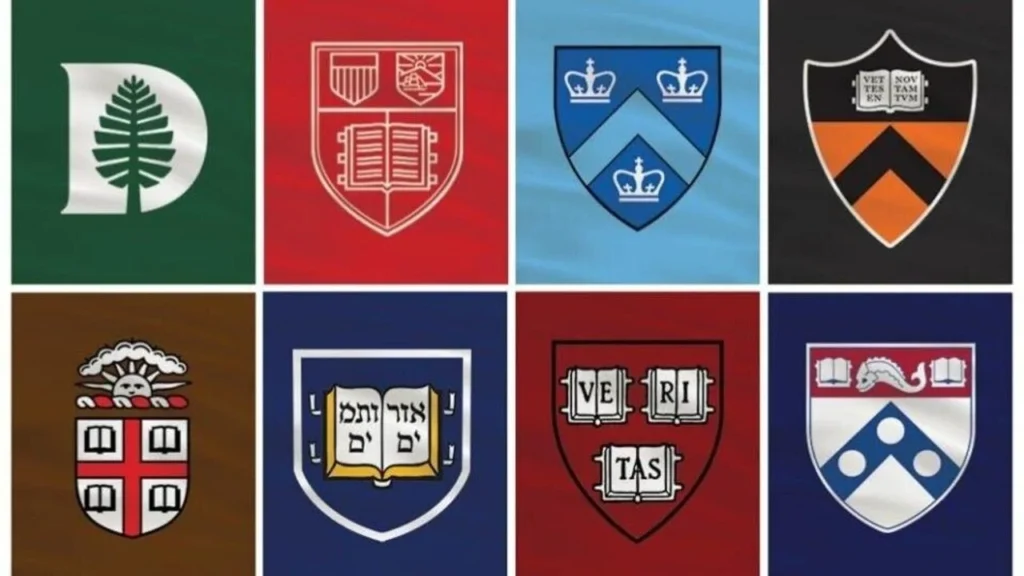
The Ivies are a group of eight private schools in the northeastern United States:
Every member except Cornell predates the founding of the United States; Harvard was founded in 1636. The Ancient Eight share an athletic conference (formed in 1954) rather than a single academic model, and their programs differ meaningfully once you look past the shared label. Understanding those differences matters before comparing Ivy League schools.
These campuses attract applicants from every state and dozens of countries. Their shared brand often masks fundamental differences in class size, teaching model, and career pipeline, which is why blanket judgments about the group tend to mislead prospective students.
Is the Ivy League Really Worth the Hype?
The question of whether the Ivies are worth it has a data-backed answer that most casual takes miss. A 2023 study by economists Raj Chetty, David Deming, and John Friedman at Opportunity Insights compared waitlisted applicants who ultimately attended an Ivy-Plus college (the eight Ivies plus MIT, Stanford, Duke, and Chicago) with similar students who went to top public flagships instead.
They found the Ivy-Plus group had a 60% higher chance of reaching the top 1% of the U.S. earnings distribution, nearly double the chance of attending an elite graduate school, and roughly triple the chance of working at a prestigious firm. On average earnings alone, the causal effect was much smaller, which is why the answer to “is the Ivy League worth it” depends heavily on which outcome you actually care about.
Value can also show up as access to specific fields or academic experiences that reshape long-term options. It varies by major, financial aid package, and career path. A campus that makes sense for one student may not for another.
Is It Worth Going to an Ivy League for Undergraduate Study?
Undergraduate education at these institutions typically emphasizes discussion-based learning and close faculty access. Princeton, for example, keeps a small entering class of about 1,370 students, and Brown maintains a 6:1 student-to-faculty ratio. Many students value the intensity and pace of campus life on these campuses.
Others find the pressure difficult or the culture less supportive than expected. Outcomes depend on how a student responds to that setting. Students often report strong academic preparation, but preparation alone does not guarantee a clear career path. Internships, mentoring, and advising all matter, and many schools outside the Ancient Eight offer comparable resources.
Benefits of an Ivy League Education
One commonly cited benefit is access to faculty who lead research in their fields, backed by endowments large enough to fund cutting-edge labs, extensive libraries, and dedicated advising. Peers with strong academic records also raise the ambient level of ambition on campus.
According to Payscale’s College Salary Report, Princeton graduates earn a median mid-career pay of $194,100, followed by Dartmouth at $178,700, Penn at $178,300, and Harvard at $177,400. Every member exceeds $155,000 mid-career, well above the roughly $101,000 median for non-Ivy graduates 20 years out.
The Department of Education College Scorecard shows Penn graduates earn a median of $112,761 ten years after enrollment, with Princeton at $110,433 and Cornell at $98,321. These figures include only students who received federal aid, so they understate outcomes for the full alumni pool. Benefits still depend on engagement, not attendance alone.
How Career Path Changes the Value of an Ivy League
The value of attending a top private college often depends on the career a student plans to pursue. Fields like finance, consulting, and certain policy roles reward early access and signaling, so a Harvard or Wharton line on a resume genuinely moves the needle for a first job at Goldman Sachs, McKinsey, or a competitive federal fellowship.
Careers in technology, healthcare, applied sciences, and K-12 education rely more on demonstrated ability, and graduates of strong state flagships and specialized private schools often see comparable outcomes. This asymmetry is measurable. Ivy-Plus alumni represent less than 0.5% of Americans, yet they account for roughly 15% of top 0.1% earners, 25% of U.S. Senators, half of all Rhodes scholars, and three-fourths of Supreme Court justices appointed in the past 50 years, per Opportunity Insights.
That distribution is meaningful for students targeting the paths where those numbers cluster. It is close to irrelevant for students entering fields where those pipelines do not run. Career alignment matters more than the school name alone.
Costs, Financial Aid, and Debt
Sticker tuition at these institutions is high. The average across the eight schools ran $67,433 in tuition and fees for 2024-2025, with total cost of attendance averaging near $91,000 once housing, meals, insurance, and expenses are included. Brown leads at roughly $71,312 in tuition and $93,164 total, while Harvard sits at the low end at $61,676. See our breakdown of the cheapest Ivy League schools for the full comparison.
Net price is a different story. Financial aid policies and tuition support programs reduce costs dramatically for many families. Harvard announced in March 2025 that beginning in 2025-2026, tuition is free for families earning $200,000 or less, and full attendance (tuition, housing, food, health insurance, travel) is free under $100,000. About 86% of U.S. families now qualify for aid at Harvard.
MIT, Penn, Princeton, and Dartmouth have adopted similar expanded thresholds. Cornell reports an average net price around $26,361 across all programs, and families earning under $30,000 pay an average of just $1,776 per year. Comparing net price rather than published tuition is essential, especially for families learning how to get financial aid for college.
Debt still shapes career choices after graduation. An elite degree may open doors, but high loan repayments can limit flexibility. Students should compare offers carefully and weigh cost as heavily as academic reputation.
Understanding Return on Investment Without Assumptions
Return on investment in higher education is not limited to salary. It includes debt level, job flexibility, and access to opportunities over time. A $178,700 mid-career median at Dartmouth means one thing for a graduate with zero debt and something very different for one carrying $150,000 in loans.
Consider two students admitted to the same program. Student A has household income below $100,000, attends tuition-free under Harvard’s expanded aid, and enters investment banking at a $110,000 starting salary. Student B pays close to sticker price for four years, graduates with $200,000 in loans, and takes the same job. The ROI gap between them is measured in years of financial recovery, not credentials.
Two students at the same school can experience very different outcomes because aid packages, majors, and economic timing all shift the calculation. Evaluating realistic scenarios, not headline averages, leads to better decisions. This is why we advise clients to run the net price calculator at every prospective school before committing.
Disadvantages and Trade-Offs
Academic pressure is one of the most common challenges students report. These campuses are highly selective, which can intensify competition and trigger imposter syndrome for students used to being the strongest in their high school. Mental health support varies by campus, and not every incoming student thrives under that intensity.
Opportunity cost is the other honest concern. Choosing one of the Ivies may mean turning down full-tuition merit scholarships at strong state flagships or specialized private colleges. Merit scholarships are also absent at the eight schools themselves; the Ancient Eight collectively agreed in the late 1950s not to offer merit-based aid, which means high-earning families who do not qualify for need-based aid pay close to full sticker.
Whether the Ivies are worth it often comes down to how a student weighs these trade-offs against alternatives. Smaller class sizes, specialized programs, and generous merit packages may be available at other schools, and a clear view of what a student is giving up supports better decisions.
Are Ivy League Schools Hard to Get Into?
Admission rates at Ivy League schools are among the lowest in the country. For the Class of 2029, Harvard admitted 4.2%, Columbia 4.29%, Princeton 4.4%, Yale 4.59%, Penn 4.9%, Brown 5.65%, Dartmouth 6.0%, and Cornell 7.9%. The group average was roughly 5.4%, down from 7.2% for the Class of 2024.
The admissions process evaluates grades (specifically, average weighted GPA), course rigor, activities, essays, and personal context. Strong high school performance is necessary but rarely sufficient. Many highly qualified applicants are denied every year.
There is no truly easy path into any of these schools, not even the hardest Ivy League to get into. Applying Early Decision or Early Action can materially improve odds for students who are a strong fit, and working with a college application consultant helps applicants assess that fit realistically. Selectivity reflects application volume and yield management as much as educational quality.
Ivy League vs Other Top Colleges
The question “are Ivy League colleges worth it” is often better framed as “worth it compared to what.” Non-Ivy peers like MIT, Stanford, Duke University, and the University of Chicago are grouped with the eight schools in Ivy-Plus research and produce similar outcomes. Several offer stronger programs in specific fields.
Some non-Ivy schools offer stronger undergraduate business training, including several of the top finance schools in the US. Others, like Johns Hopkins, specialize in engineering, biomedical research, or public service. The Princeton Review’s ranking of value schools placed MIT first among private universities and Georgia Institute of Technology first among publics, based on cost, aid, career placement, graduation rates, alumni salary, and student debt.
Public universities and state flagships, including Purdue University, can deliver comparable outcomes at a fraction of the cost. UC Berkeley charges roughly $45,000 out of state, and honors colleges at large flagships often rival elite private schools in resources and faculty access. Reviewing the best non-Ivy League colleges alongside the Ancient Eight gives students more leverage during the decision. Prestige should not limit the search.
Pros and Cons of Each Ivy League School
Every member of the group has distinct strengths and trade-offs, which matters because “the Ivy League” is not a single product. The comparison below summarizes what each school does well and where each falls short.