



How These Enrollment Figures Are Measured
Every accredited institution reports its student counts to the Integrated Postsecondary Education Data System, or IPEDS, which is maintained by the U.S. Department of Education. The figures above come from that dataset, so every school is counted the same way.
IPEDS uses a fall headcount that combines full-time and part-time students at every level. That is why community colleges rank so highly; a student taking two evening courses counts the same as a full-time freshman.
School-reported numbers sometimes differ from federal figures by a few hundred students. Institutions publish their own counts earlier and may use slightly different cutoff dates, so a university’s website can show a number that has not yet appeared in the federal survey.
NC State University Enrollment Overview
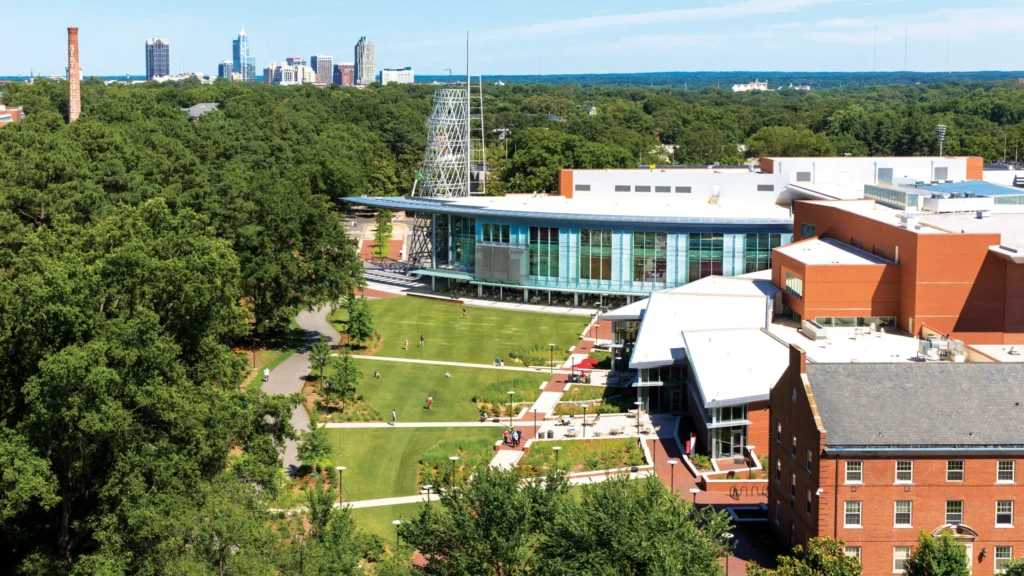
NC State reported more than 37,400 students for Fall 2025, split roughly between 27,900 undergraduates and 9,600 master’s and doctoral candidates. Federal data for the most recent completed survey year places the campus at 37,323.
The Raleigh institution reached this size through its role as a major land-grant research university. Its program mix spans engineering, textiles, agriculture, design, veterinary medicine, and the life sciences.
The broader system it belongs to has been expanding as well. The UNC System surpassed 256,000 students in fall 2025, a record across its 16 public campuses.
Largest Private Schools in the State
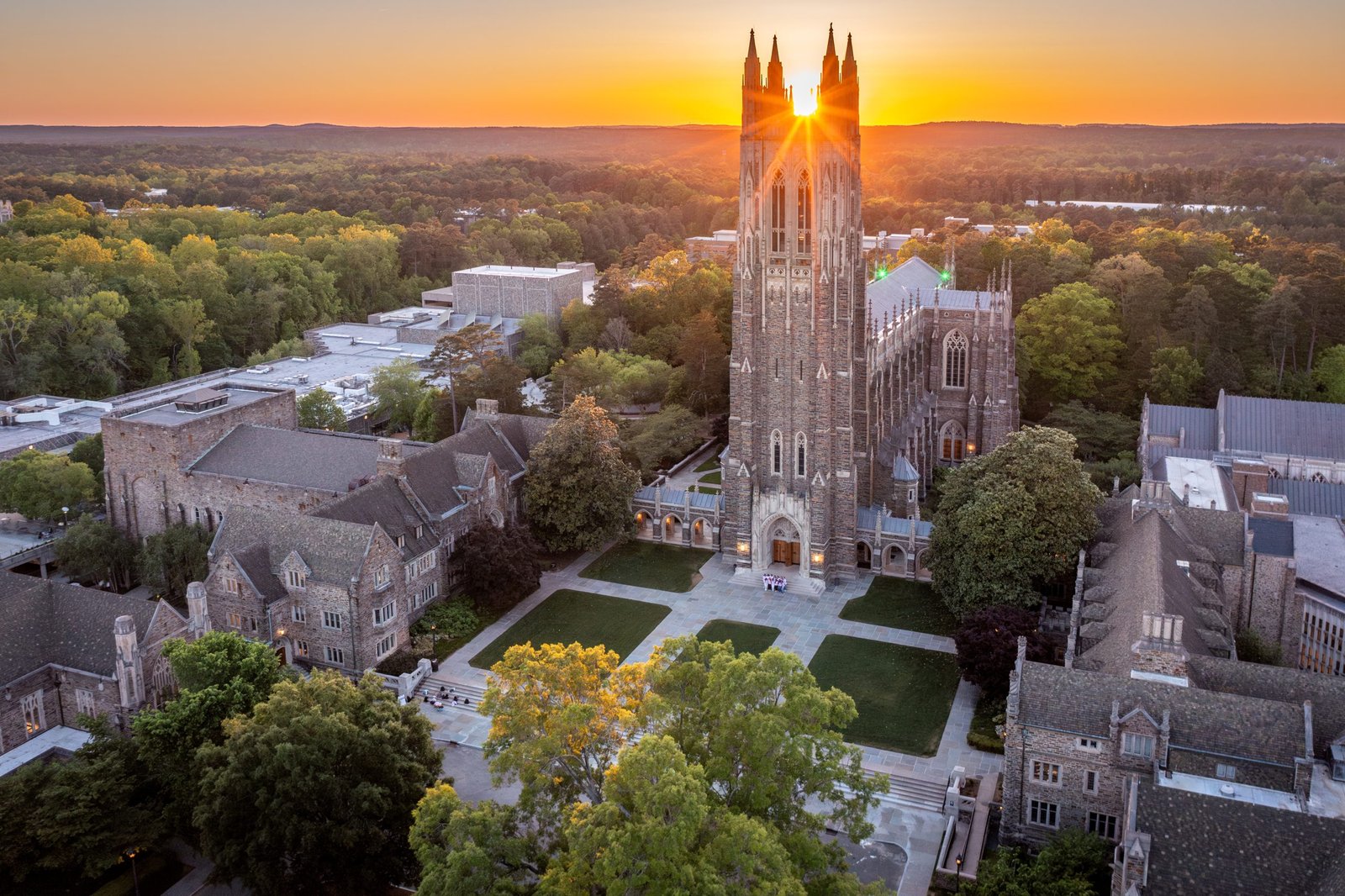
Duke University leads the private sector at roughly 17,100 students, a figure that includes its medical, law, and business schools. Its undergraduate population is far smaller than that total suggests.
Wake Forest University follows at about 9,100, and High Point University enrolls roughly 6,300. Elon University sits close behind at around 7,200.
None of these approach the scale of the flagship public campuses, which is typical nationally; most of the largest private universities in America still trail their public counterparts in raw headcount.
Community Colleges With the Highest Headcounts
Wake Technical Community College in Raleigh enrolls about 22,800 students, placing it above several four-year universities. Central Piedmont Community College in Charlotte follows at roughly 18,400.
Cape Fear, Fayetteville Technical, Guilford Technical, and Forsyth Technical each enroll between 8,700 and 14,100. Together, the 58-campus community college system serves hundreds of thousands of students annually.
These totals reflect a different enrollment pattern. Two-year schools count part-time learners, workforce trainees, and dual-enrollment high school students, which inflates headcount relative to full-time equivalent figures.
Historically Black Institutions Among the Largest Campuses
North Carolina A&T State University in Greensboro enrolls roughly 13,900 students and is the largest historically Black university in the country. North Carolina Central University in Durham follows at about 8,000.
Both rank among the largest schools in NC by any measure, and they anchor a strong statewide presence of historically Black colleges and universities, which includes Fayetteville State, Winston-Salem State, and Elizabeth City State.
Largest University in NC by Area
NC State is frequently cited as the largest campus by physical footprint. Its main campus, Centennial Campus, and agricultural research land together cover well over 2,000 acres of academic buildings, engineering facilities, and working farmland, a footprint similar in scale to Louisiana State University, one of the largest colleges in Louisiana.
East Carolina University also holds a substantial footprint, spanning more than 1,600 acres across its teaching, medical, and coastal research sites. Acreage totals vary depending on whether leased land and satellite research stations are counted.
Some of the biggest universities in North Carolina occupy large areas because they operate farms, forests, laboratories, or field stations. A sprawling campus does not automatically mean a bigger student body; acreage measures land use, not headcount.
How College Size Affects Students
Large campuses typically offer more majors, more research openings, and hundreds of student organizations. Smaller institutions such as Davidson, Elon, or Wake Forest tend to deliver a different classroom experience with tighter cohorts.
Class size, advising access, and campus culture all shift with enrollment. Introductory lecture courses at a 30,000-student university can hold several hundred people, while upper-level seminars at the same school may hold twelve.
Size is one input among many. Program strength, graduation outcomes, and the return on investment of college degrees matter more to most families than raw student counts.
Common Misunderstandings About College Size
Many families assume bigger means better. Enrollment totals predict neither fit nor outcomes, and some of the strongest programs in the state sit on modest campuses.
A second misconception involves terminology. A large enrollment figure often includes graduate and professional students, which is one reason the distinction between a college and a university matters when comparing numbers.
At CollegeCommit, our educational consulting team helps families interpret these figures in context rather than treating size as a proxy for quality. We work with students nationwide and globally, and we know how applicants weigh campuses across Raleigh, Charlotte, Greensboro, and the Research Triangle.
Comparing schools against verified data, rather than reputation alone, leads to better decisions.


