



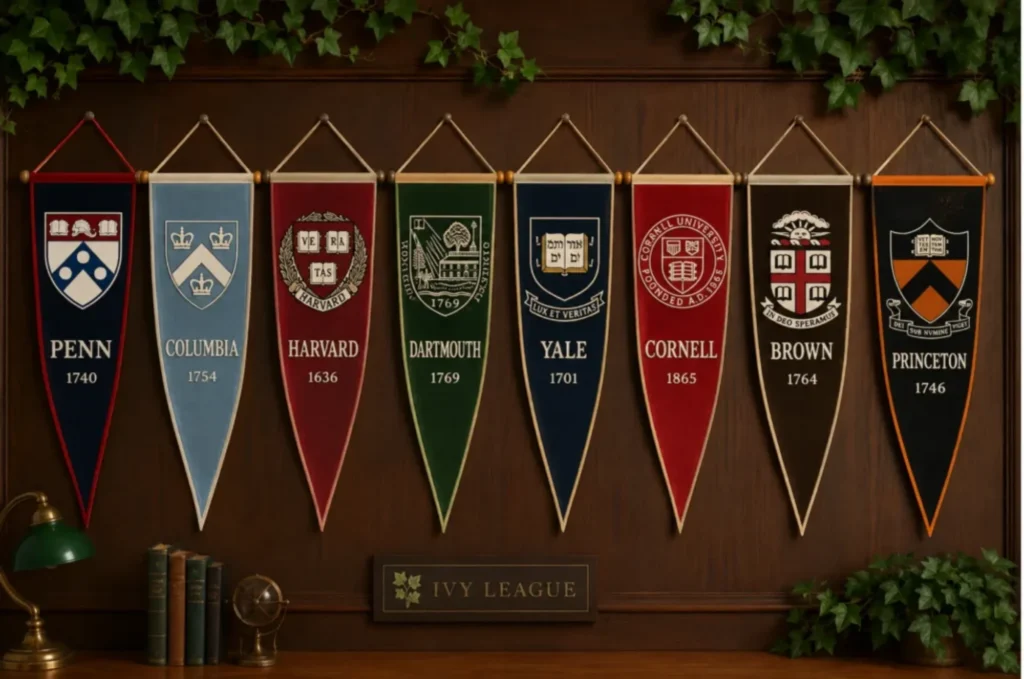
The Ivy League is an athletic conference of eight private universities in the northeastern United States. Confusion happens because people mention other elite schools at the same time.
This guide covers all 8 official Ivies plus where that extra 4 comes from.
Table of Contents
ToggleKey Takeaways
- The Ivy League consists of exactly 8 schools: Brown, Columbia, Cornell, Dartmouth, Harvard, Princeton, the University of Pennsylvania, and Yale. The number 12 comes from people incorrectly grouping in other selective schools, not from any official expansion of the conference.
- Stanford, MIT, the University of Chicago, and Caltech are the 4 schools most often mistaken for Ivies. None of them have ever been part of the Ivy League, which remains strictly an athletic conference formed in 1954.
- Acceptance rates across the 8 Ivies currently range from about 4.2 percent at Harvard to 8.4 percent at Cornell, making all 8 schools highly competitive despite the spread.
- The total annual cost of attendance at an Ivy League school generally ranges from $83,000 to $91,000, though need-based financial aid can significantly reduce what a family actually pays.
- Choosing among Ivy League schools depends on factors beyond the acceptance rate, including location, departmental academic strengths, school size, and campus culture.
How Many Ivy League Schools Are There?
There are 8 Ivy League schools:
- Brown University
- Columbia University
- Cornell University
- Dartmouth College
- Harvard University
- Princeton University
- University of Pennsylvania
- Yale University
That answer surprises people who expect a longer list. Outside sources sometimes report 10 or 12 by mistake. For the same reason, people often ask how many schools are in the Ivy League.
The Ivy League itself isn’t a stamp of academic quality; it’s a Division I athletic conference, formed in 1954, comprising 8 of the oldest and most selective research universities in the country. That athletic origin still shapes admissions today, and recruited athletes follow a distinct application path at every Ivy.
The rest of this guide covers each school individually, plus the additional schools people commonly, and incorrectly, group in with them.
Why Are They Called Ivy League Schools?
The term Ivy League predates the conference that carries the name today. Sportswriters in the 1930s used “ivy” to describe the older colleges in the Northeast, likely a nod to the ivy-covered stone buildings common on these campuses.
When the conference formally organized in 1954, the name stuck. It has nothing to do with academics, though the label eventually became shorthand for elite education.
What Are the Schools in the Ivy League?
Each Ivy League institution below takes its own path toward academic excellence, with different strengths, sizes, and locations, but all share one defining trait: extremely low acceptance rates.
All Ivy League colleges in the USA are private, non-profit schools located in the Northeast. The figures below reflect the most recently confirmed admissions cycle for each school and shift slightly each year. Knowing when college applications are due each cycle helps applicants plan around these updates.
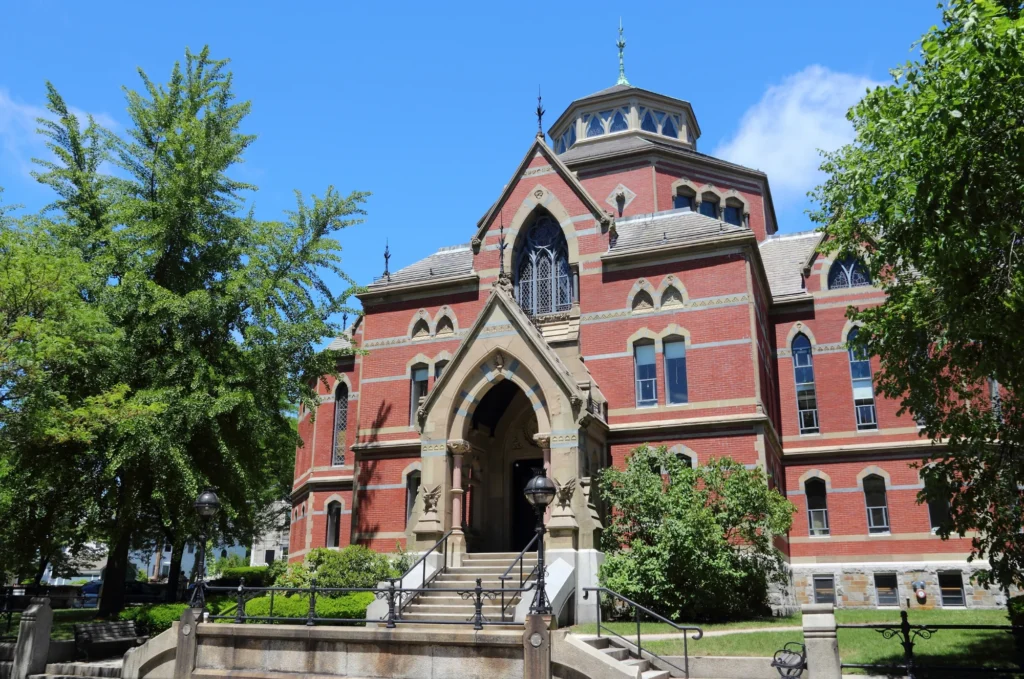
Brown University
Brown University is located in Providence, Rhode Island. It is known for its open curriculum, which eliminates most general education requirements, allowing students to build their own course of study almost from scratch.
Undergraduate enrollment runs a little over 7,000 students. Brown’s acceptance rate for the most recent cycle was around 5.6 percent, with admitted students typically scoring 1510 to 1580 on the SAT and total annual costs running around $89,000.
Popular majors include computer science, economics, and international relations; notable alums include actor Emma Watson.
Columbia University
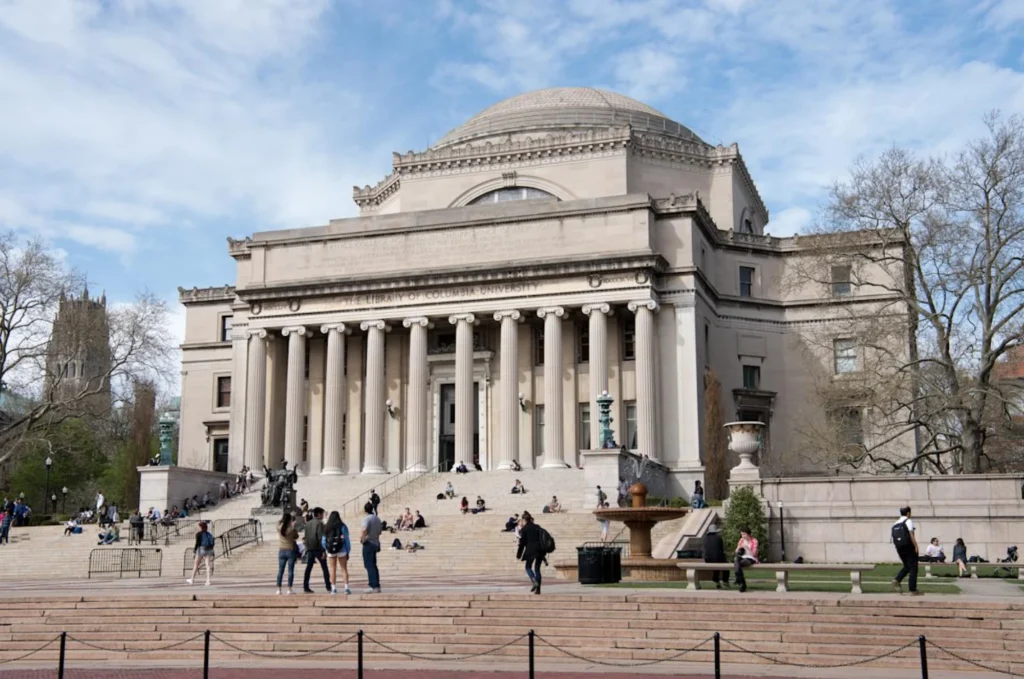
Columbia University is located in Manhattan, so an Ivy League education here comes with a subway ride to pretty much anything New York City has to offer.
Its Core Curriculum requires all undergraduates to complete a shared set of courses in literature, philosophy, and the arts before choosing a major.
Columbia’s acceptance rate is around 4.3 percent; admitted students usually score in the 1510 to 1560 range on the SAT, and total annual costs run around $91,000.
Strong programs include economics, political science, and computer science; alums include former president Barack Obama, who transferred in as an undergraduate.
Cornell University
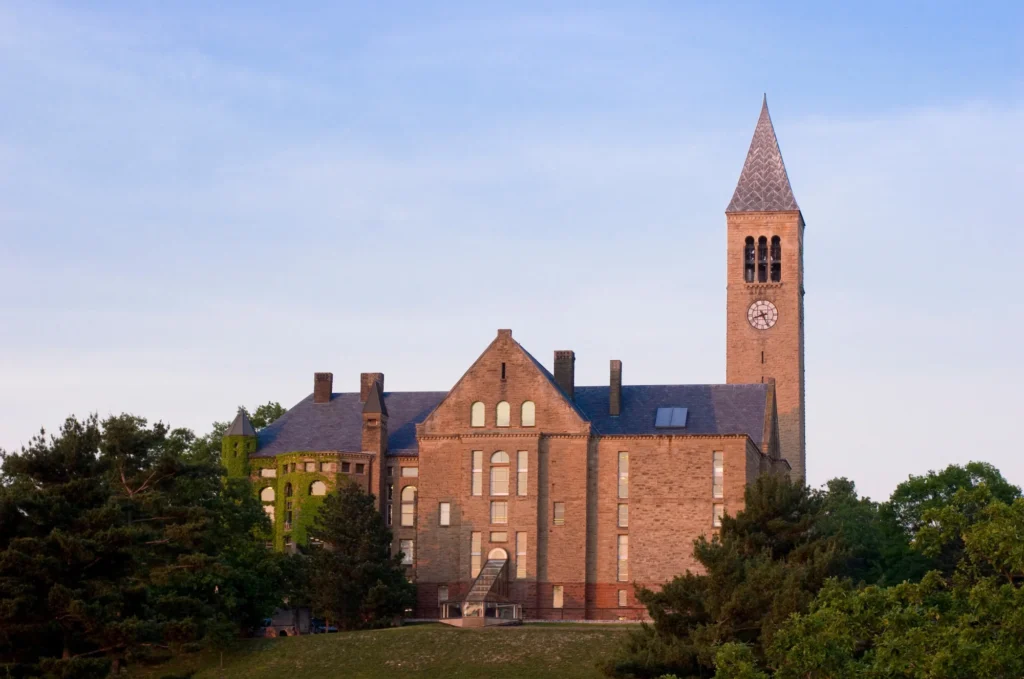
Cornell University in Ithaca, New York, is the largest Ivy League school by undergraduate enrollment, with more than 15,000 undergraduates on campus.
It’s also a land-grant university, which gives it programs most Ivies don’t offer, everything from agriculture to hotel administration to veterinary medicine.
Cornell’s acceptance rate is the highest in the Ivy League at roughly 8.4 percent, with typical SAT scores ranging from 1480 to 1550, and total annual costs around $86,000. Popular majors include engineering, business, and computer science; alums include science communicator Bill Nye.
Cornell University
Cornell University in Ithaca, New York, is the largest Ivy League school by undergraduate enrollment, with more than 15,000 undergraduates on campus.
It’s also a land-grant university, which gives it programs most Ivies don’t offer, everything from agriculture to hotel administration to veterinary medicine.
Cornell’s acceptance rate is the highest in the Ivy League at roughly 8.4 percent, with typical SAT scores ranging from 1480 to 1550, and total annual costs around $86,000. Popular majors include engineering, business, and computer science; alums include science communicator Bill Nye.
Dartmouth College
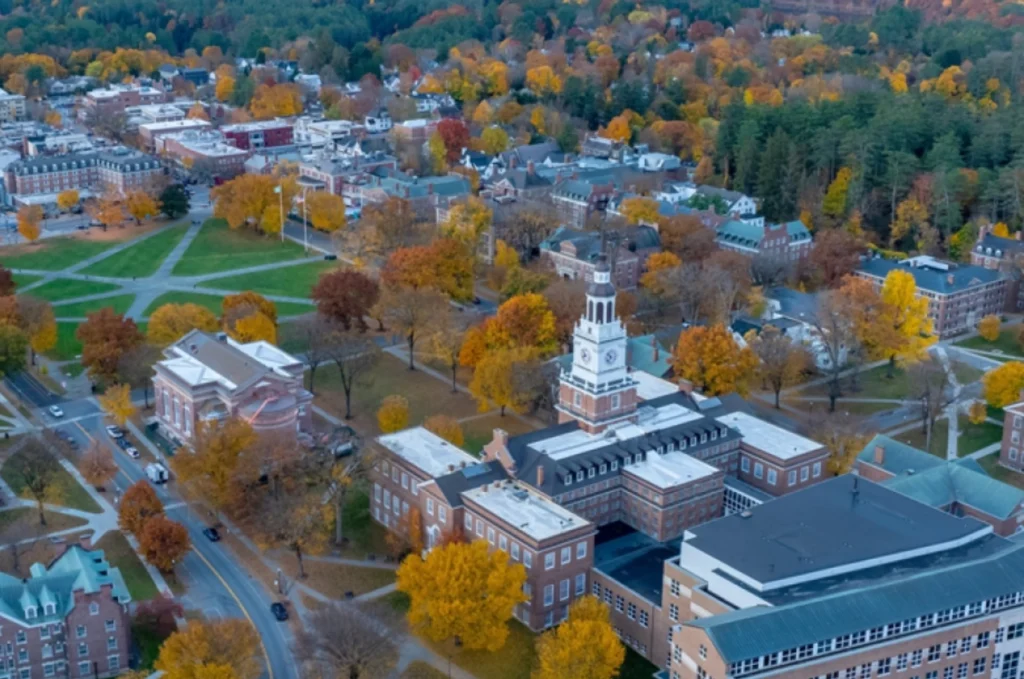
Dartmouth College is the smallest Ivy League school, tucked into Hanover, New Hampshire. It runs on a year-round quarter system, so students can take a term off for an internship, summer program, or research project without falling behind.
Dartmouth’s acceptance rate is around 6 percent; admitted students typically score 1440 to 1580 on the SAT, and total annual costs run around $91,000. Economics, government, and engineering are among its strongest programs; alums include author Theodor Geisel, better known as Dr. Seuss.
Harvard University
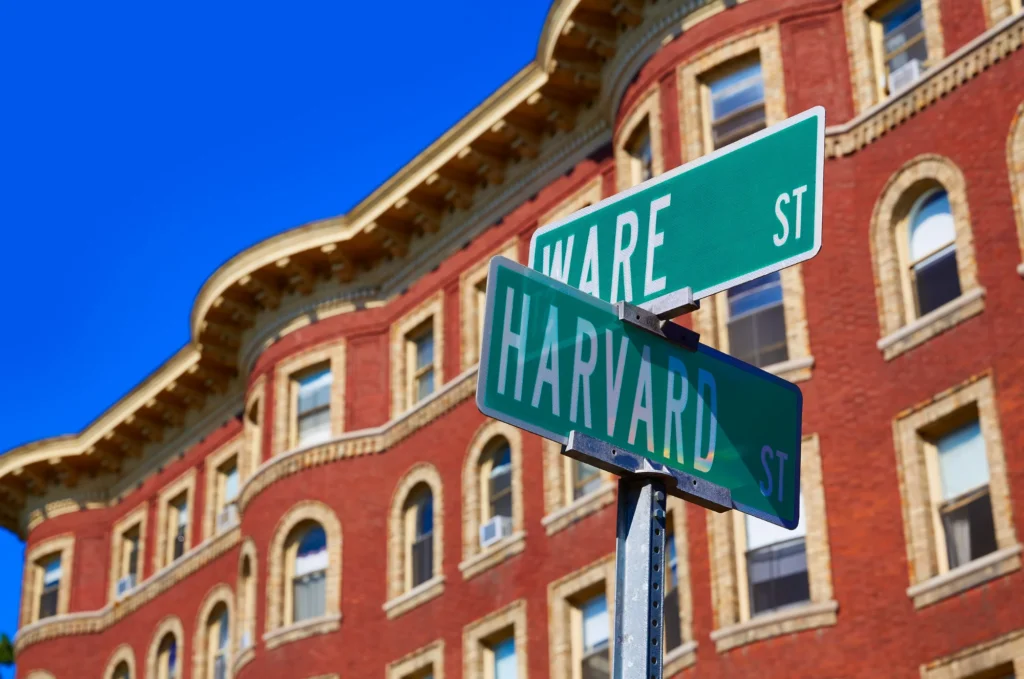
Harvard University, founded in 1636 in Cambridge, Massachusetts, is the oldest university in the United States, older than the country itself.
It’s also the most selective Ivy, with a recent acceptance rate near 4.2 percent, admitted students typically scoring 1500 to 1580 on the SAT, and total annual costs around $83,000.
Harvard’s 13 schools cover everything from undergraduate liberal arts to law, medicine, and business. Popular majors include economics, government, computer science, and applied math; alums include cellist Yo-Yo Ma.
Princeton University
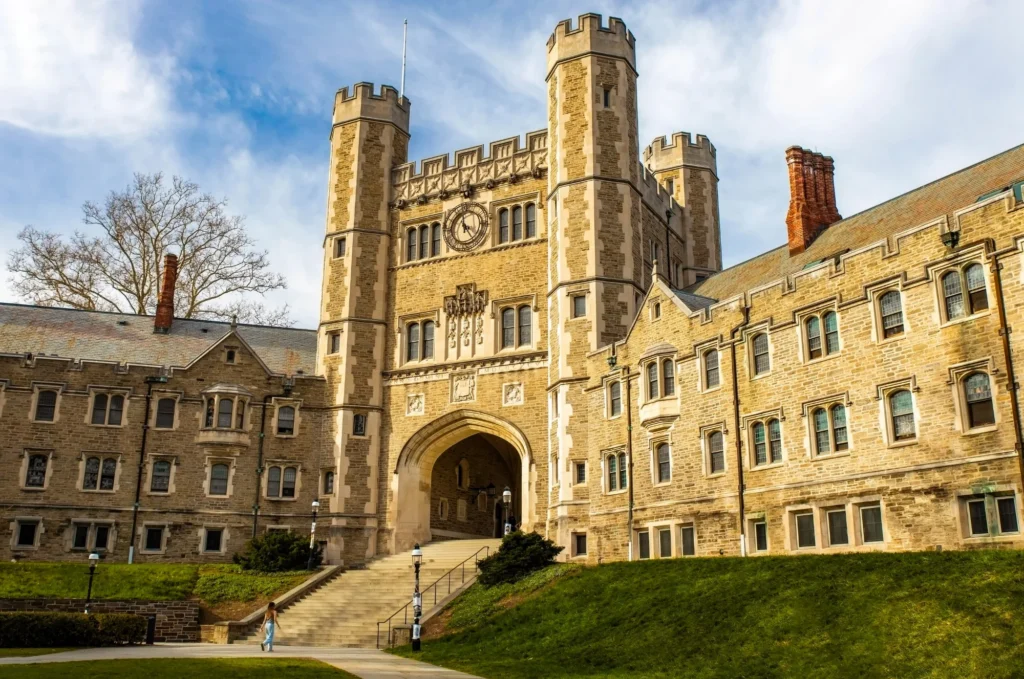
Princeton University, founded in 1746 in Princeton, New Jersey, places greater emphasis on undergraduate teaching than some of its larger Ivy peers.
It offers 37 degree programs and requires a senior thesis, similar to a capstone project, from every undergraduate, a rite of passage students either dread or brag about for years afterward.
Princeton’s acceptance rate runs around 4.4 percent, admitted students typically score 1510 to 1580 on the SAT, and total annual costs run around $84,000. Strengths include public policy, engineering, and the physical sciences; alums include Amazon founder Jeff Bezos.
University of Pennsylvania
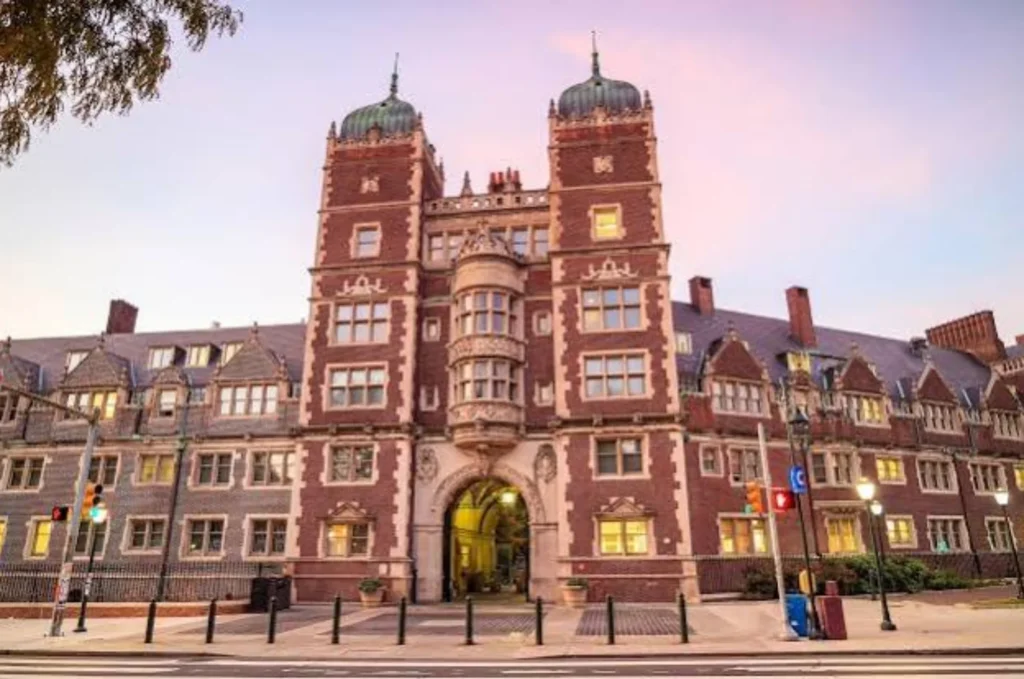
The University of Pennsylvania, known as Penn, was founded by Benjamin Franklin in Philadelphia in 1740. It’s home to the Wharton School, one of the best-known business programs in the country.
Penn’s acceptance rate is around 4.9 percent; admitted students typically score 1500 to 1570 on the SAT, and total annual costs run around $86,000. Popular majors include finance, nursing, and biology; alums include investor Warren Buffett.
Yale University
Yale University, in New Haven, Connecticut, is known for its residential college system, which groups students into smaller communities within the larger university, almost like built-in friend groups from day one.
It offers programs across 14 schools, including Yale College and its law and drama schools. Yale’s acceptance rate sits near 4.6 percent, admitted students typically score 1500 to 1580 on the SAT, and total annual costs run around $86,000.
Strong programs include economics, political science, and history; alums include actress Meryl Streep.
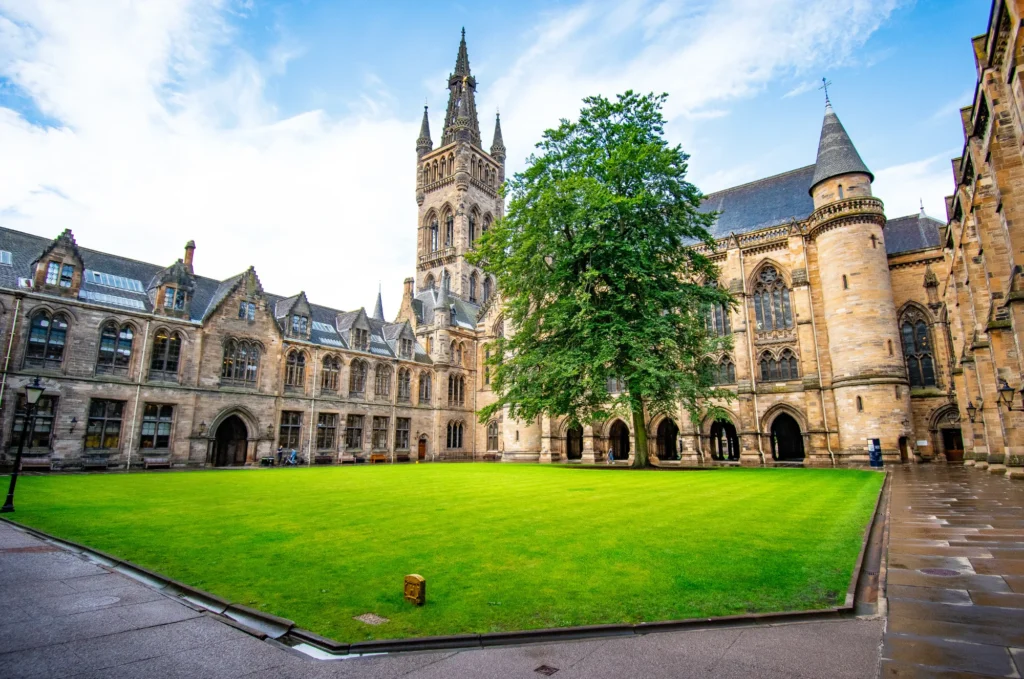
4 Schools Often Grouped With the Ivies
These 4 schools are not part of the Ivy League and never officially have been:
- Stanford University
- Massachusetts Institute of Technology
- University of Chicago
- Caltech
They get lumped in anyway because their selectivity, reputation, and research output put them in the same conversation as the 8 official Ivies.
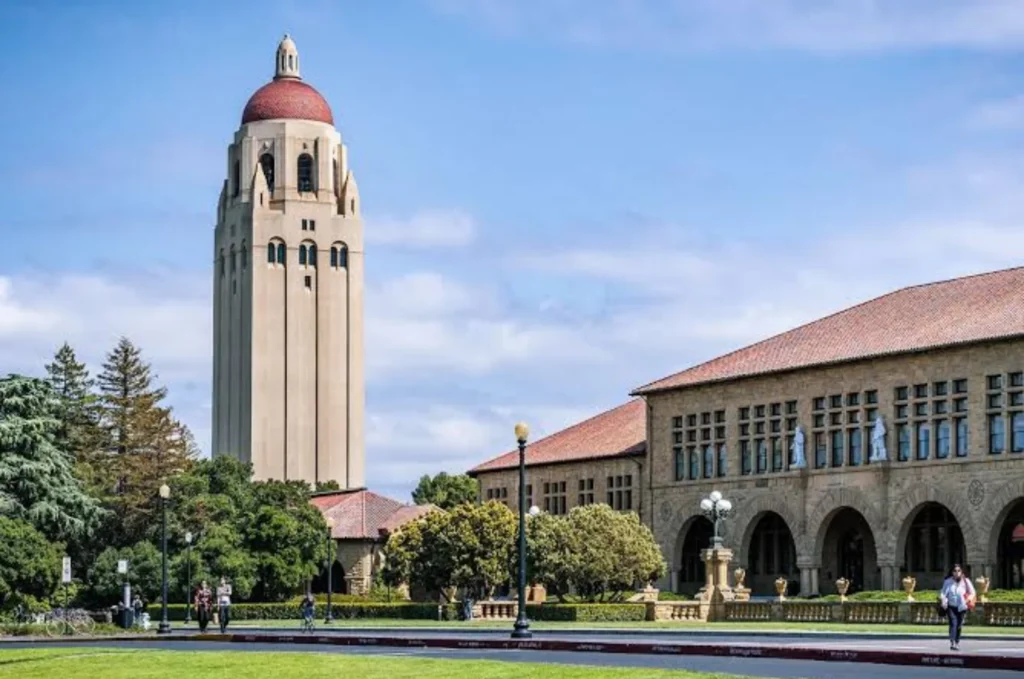
Stanford University
Stanford University sits in the heart of Silicon Valley in Northern California, which shows in what students end up building after graduation.
It’s known for producing entrepreneurs and researchers across technology, business, and the sciences, with especially strong computer science and engineering programs.
Stanford’s acceptance rate has recently run in the 3.5 to 4 percent range, among the lowest of any US university, with total annual costs around $90,000. It’s often the first non-Ivy school people add when they picture an expanded Ivy League, and its alums include Google co-founder Larry Page.
Massachusetts Institute of Technology
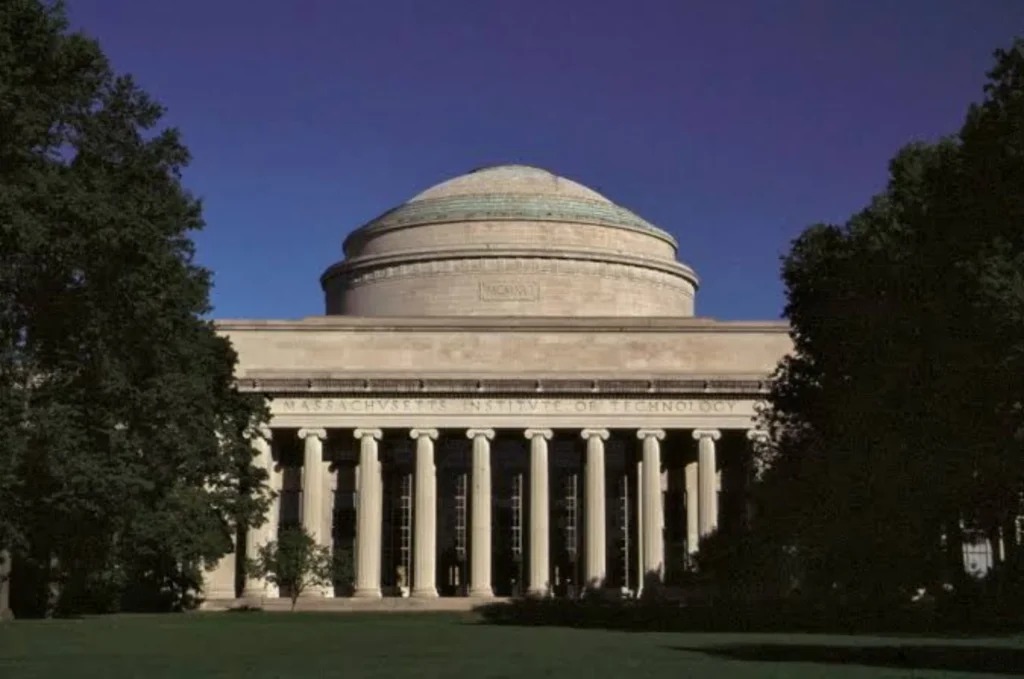
MIT, based in Cambridge, Massachusetts, is one of the most selective universities in the country and the top choice for many students focused on engineering, physics, or computer science.
Its acceptance rate typically falls between 4 and 5 percent, depending on the cycle, with admitted students commonly scoring 1520 to 1580 on the SAT and total annual costs around $83,000.
MIT operates independently of the Ivy League but is often mentioned alongside it due to its research output and admissions selectivity. Popular majors include computer science, mechanical engineering, and mathematics; alums include astronaut Buzz Aldrin.
University of Chicago
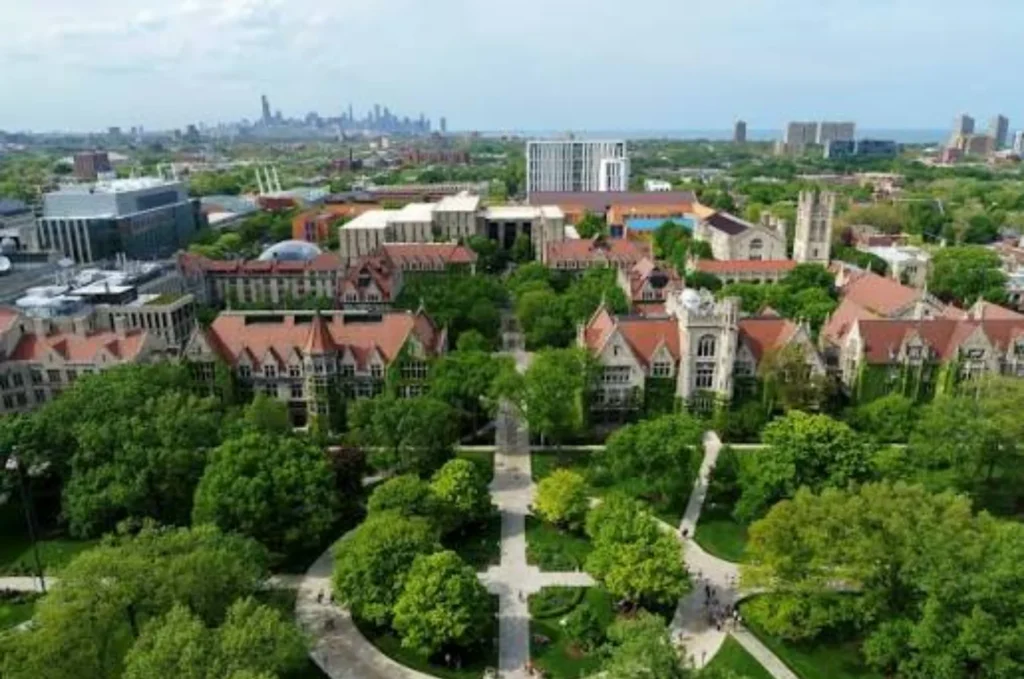
The University of Chicago is located in Chicago’s Hyde Park neighborhood and built its reputation on rigorous academics and an unconventional Core Curriculum.
It’s especially well known for economics, home to what’s often called the “Chicago school” of economic thought.
UChicago’s acceptance rate is around 5 percent, similar to several Ivies, with admitted students typically scoring 1510 to 1560 on the SAT and total annual costs around $89,000. Popular majors include economics, computer science, and biology; alums include astronomer Carl Sagan.
Caltech
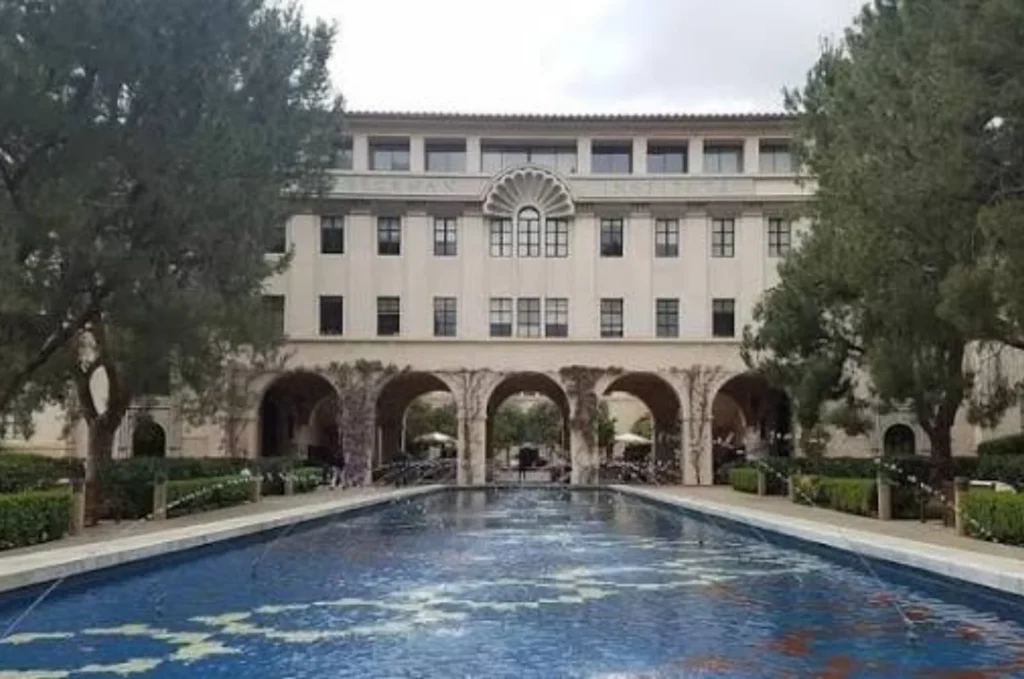
Caltech, in Pasadena, California, is the smallest school on this list, enrolling roughly 900 undergraduates total, small enough that most students know their professors by first name.
Its curriculum is almost entirely STEM-focused, with little coursework outside science and engineering. Caltech’s acceptance rate is regularly among the lowest in the country, often below 4 percent, with total annual costs around $83,000.
It’s a strong fit for students who want deep specialization in the sciences without a broad liberal arts requirement, and alums include Intel co-founder Gordon Moore.
Ivy League Rankings and Ivy Plus Comparison
Ivy League Schools Ranked by Selectivity
Acceptance rate is a clear way to approach comparing Ivy League schools, though it’s not the whole story of academic quality. Below is the most recent recorded acceptance rate for each school, from most to least selective.
| School | Acceptance Rate |
|---|---|
| Harvard University | ~4.2% |
| Columbia University | ~4.3% |
| Princeton University | ~4.4% |
| Yale University | ~4.6% |
| University of Pennsylvania | ~4.9% |
| Brown University | ~5.7% |
| Dartmouth College | ~6.0% |
| Cornell University | ~8.4% |
These numbers vary year to year based on application volume and changes in testing policies, so treat this table as a snapshot of current Ivy League admission rates, not a fixed ranking.
All 8 schools release decisions on the same date each spring, an event widely known as Ivy League Decision Day. Columbia University, Cornell University, and the other 6 Ivies each carry distinct academic reputations that a single acceptance-rate figure doesn’t fully capture.
Ivy League vs. Ivy Plus Schools
“Ivy Plus” is an informal term, not an official designation, used to describe non-Ivy schools that match the Ivies in selectivity and reputation.
Stanford, MIT, UChicago, and Caltech are among the best non-Ivy League colleges most often placed in that group. Ask five people, and you will get five different lists. Duke is one of the names that comes up in that conversation. Johns Hopkins and Northwestern also show up, depending on who is talking.
The Ivy League, by contrast, refers only to the 8 schools that belong to that specific athletic conference. Knowing the difference matters if you’re building a college list, since “Ivy Plus” schools follow their own separate admissions processes with no connection to the Ivy League itself.
How to Choose the Right Ivy League School
Acceptance rate alone doesn’t tell you which school is a good fit for a given student, since it captures only one small piece of a much larger admissions process. Understanding what it actually means to be admitted to a college can help put those acceptance rate numbers in perspective. It can also help to know the average weighted GPA for the Ivy League, which offers another data point beyond acceptance rate alone.
At CollegeCommit, we typically see families weigh the same handful of variables once they get past the initial excitement of the Ivy League name. This kind of comparison often comes up during senior-year planning; see this senior-year admissions guide for a broader timeline. The 4 factors below are a reasonable starting point for narrowing a list:
- Location and campus setting
- Academic programs and majors
- Good academic planning starts well before senior year.
- School size and class sizes
- Campus culture and student life
Working with college coaches is another way some families supplement that firsthand research.
Families looking for a broader framework can also review admissions strategies for Top 20 schools.
Beyond choosing the right school, the application itself matters. Reviewing the steps to writing a strong college essay is worth doing early, since most Ivies weigh the personal statement heavily.
Location and Campus Setting
Ivy League schools range from urban to rural. Columbia and Penn sit inside major cities, Cornell and Dartmouth are in small college towns, and Princeton falls somewhere in between, a quiet suburban campus within driving distance of both New York City and Philadelphia.
A student who thrives on subway commutes and 24-hour diners may feel stranded in a town with one traffic light, and the reverse is just as true.
Academic Programs and Majors
Each Ivy carries a reputation for academic rigor, and the schools offer wildly different strengths across departments. Cornell’s hotel administration program, Penn’s Wharton School, and Princeton’s public policy program are examples of concentrations that go well beyond what’s available at most universities.
Checking a specific department’s academic programs, course catalog, and faculty members is more useful than relying on general reputation alone. For a wider view of the process, see this overview of college admissions strategies.

School Size and Class Sizes
Cornell enrolls more than 15,000 undergraduates, while Dartmouth enrolls closer to 4,500. That gap changes everything from class sizes to how easy it is to get individual attention from professors. Students who want a smaller, tighter-knit community may find Dartmouth or Brown a better fit than Cornell or Penn.
Campus Culture and Student Life
Culture varies more than most applicants expect, and prospective student-athletes should also understand how college sports recruiting works before applying. Some schools lean heavily into athletics and Greek life; others center on research and academic clubs; and a few, like Brown, are built around near-total curricular freedom.
Visiting campus, sitting in on a class, or talking to current students usually reveals more about fit than any ranking list a high school student finds online. Thinking through extracurricular plans before applying can help align a student’s interests with the right campus culture.
Common Questions About the 12 Ivy League Schools
Are There 12 or 8 Ivy League Schools?
There are 8 official Ivy League schools. The number 12 comes from people informally adding schools like Stanford, MIT, UChicago, and Caltech to the list because of their similar selectivity and reputation, not because they’re formally part of the Ivy League.
Every university application still goes through each school’s own independent process, regardless of how it gets grouped informally.
Which Ivy Is Most Prestigious?
There’s no single official ranking of prestige, and honestly, the answer depends on who you ask. By acceptance rate, Harvard is typically the hardest Ivy League school to get into, and it also carries the strongest general name recognition.
That said, prestige within a specific field often shifts: Penn’s Wharton School and Princeton’s public policy program are both considered top-tier in their respective areas regardless of overall university ranking.
What Is the Lowest Ivy League School?
Cornell has the highest acceptance rate among the 8 Ivies, currently around 8.4 percent, making it commonly considered the easiest Ivy League school to get into.
Cornell is still highly competitive by any normal admissions standard, and the idea of a “worst Ivy League school” doesn’t really apply, since “lowest” here only means lowest relative to the other 7 Ivies, not low in any absolute sense.
How Much Does an Ivy League Education Cost?
Total cost of attendance across the 8 Ivies generally ranges from $83,000 to $91,000 per year, including tuition, fees, housing, and other costs. Sticker price varies by school, and identifying the cheapest Ivy League school starts with comparing total cost-of-attendance figures, which change annually, which is part of why families often ask whether an Ivy League education is worth the cost.
Most Ivies offer substantial Ivy League tuition support through need-based financial aid that can lower the amount a family actually pays by a considerable margin. None of the 8 Ivies award merit-based scholarships, so aid is based entirely on demonstrated financial need. Families navigating that process sometimes work with collegiate advisors to estimate costs and aid eligibility in advance.
Can a College Become an Ivy League School?
No. The Ivy League has included the same 8 schools since it formally organized in 1954, and there’s no application process for another university to join.
Schools sometimes described as “Ivy Plus” are informally compared to the Ivies based on selectivity and reputation, not through any path to actual membership. Prospective applicants can find school-specific application information directly through each university’s admissions office.


